Notes:
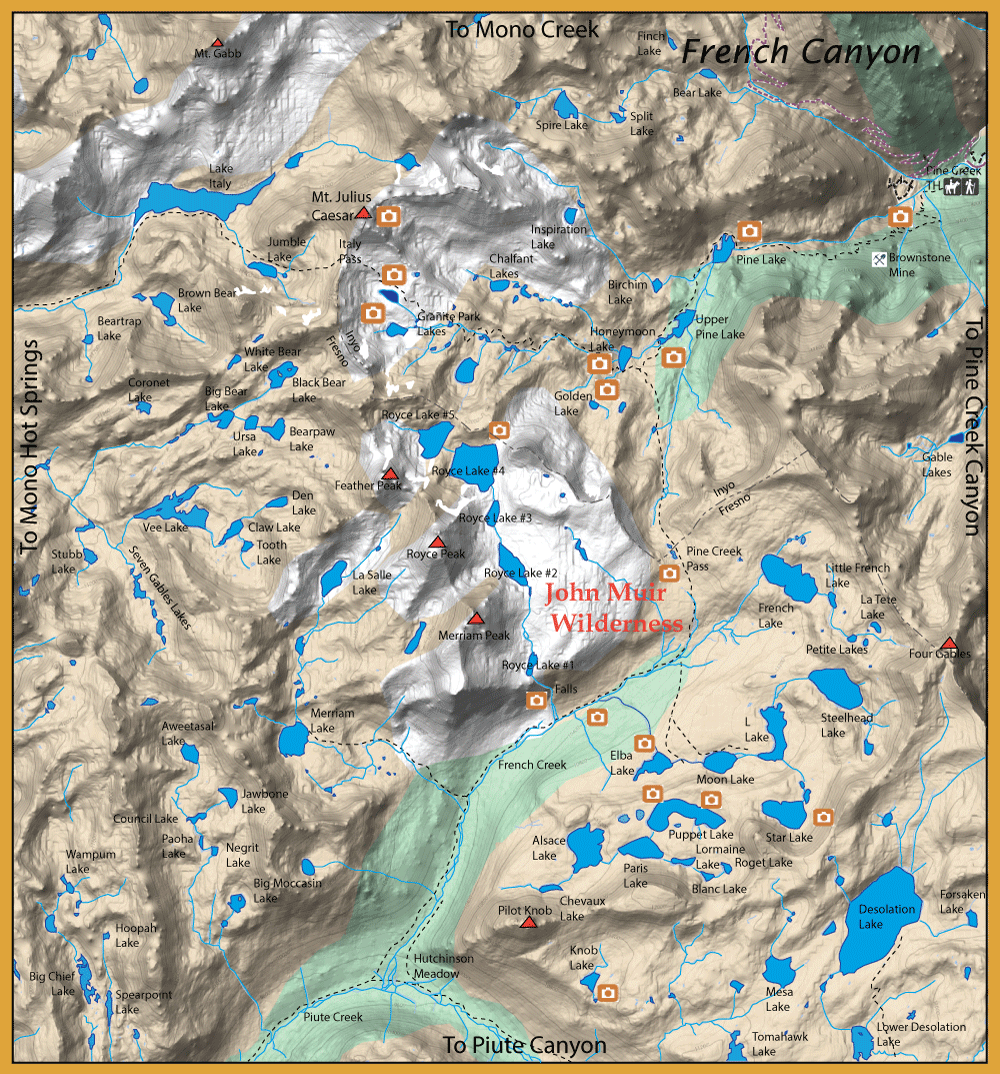
French Canyon or French Creek is a tributary of Piute Creek before it merges with the South Fork of the San Joaquin just above Florence Lake. The area includes numerous lakes all above 11,000 feet containing Golden Trout and Rainbow Hybrids. This area also lies totally within the John Muir Wilderness. Prior to 1950, most of the lakes within French Canyon were unnnamed. The French derivations came from Ralph Beck from Bishop’s Dept. of Fish and Game , who served in France during World War II. The area is generally available to fish between July and October. It is fairly open country with plenty of talus rock yet quite navigatible. Winds can be substantial during the afternoons and the area is frequented by late afternoon lightning storms. The area is known for the Goldens which were planted within this area from the hatchery program at Cottonwood Lakes during the 1950’s to 1990’s. It was later discovered that most of these plantings were actually Golden-Rainbow hybrids which had contaminated the Cottonwood Lakes gene pool. You will find that the trout of French Canyon have a remarkable blend of colors. The high intensity UV light brings out a lot of the yellows and orange of the fish. The region has had a reputation of growing some of the largest Goldens within the Sierra.
From the Pine Creek Trailhead, starting at 7,400 feet elevation, you pass through a grove of Aspen, Birch, Juniper, Jeffrey Pine, and Red Fir. In about a mile, the trail merges with a mining road to the defunct Brownstone Mine. The mine is another mile further up the trail at 9100 feet elevation, so you would have climbed over 1700 feet within the first two miles of the trail. You will reach the John Muir Wilderness Boundary at the 2.25 marker and it’s another 1/2 mile before you are along the cascading Pine Creek below Pine Lake at 9800′. This trail covers the following areas:
Pine Creek: The creek has about 1 mile of fishable stream from Pine Lake to Honeymoon Lake with an elevation gain 450 feet. It drains the Granite Park and Chalfant Lakes basin. The stream has good productivity and excellent spawning. Pine Creek contains both Rainbow Trout and Brookies.
Pine Lake: 19 acres at 9,942 feet. About 4 miles from the trailhead at 9,942 feet. The trail wraps around the northern portion of the lake. Pine Lake consists of Brookies and Golden-Rainbow Hybrids.
Upper Pine Lake: 4.75 miles from the trailhead at 10,200′. Consists of Brookies and Rainbow Trout.
Honeymoon Lake: At 5 miles from the trailhead the trail forks . The left fork heads up to Pine Creek Pass. To the right fork, you will see Honeymoon Lake (10,440′). Also consists of Brookies and Rainbow Trout.
Golden Lake: From Honeymoon Lake, you can travel off-trail about 1/3 mile to Golden Lake. It is about 400 feet higher than Honeymoon at a 10,850 foot elevation. Golden Lake consists of Golden Trout.
Granite Park: Continuing on the trail past Honeymoon Lake anoth mile you reach the beginning of a series of unnamed lakes amid a granite landscape. This is Granite Park. Each of lakes have Goldens and the lakes extend for about another 1.5 miles to the uppermost lake at 11,825 feet just below Italy Pass. This uppermost lake is fishless but the lake just south of it at 11,625 feet has Goldens.
Off-trail from Pine Lake are two lakes of interest, Birchim Lake (6 acres) which has been stocked with Lahontan Cutthroats and Inspiration Lake (10 acres) that holds Golden Trout. Another off-trail group of lakes above Honeymoon Lake are the Chalfant Lakes which contain Rainbows.
From the Pine Creek Pass, you can reach:
Big French Lake: 59 acre lake at an elevation of 11,240 feet. Up to 58 feet in depth. It has a fair food source and good spawning. Go east off-trail from Pine Creek Pass for about .75 miles. This lake was aerially planted every two years. Consists of Goldens up to 15 inches and Rainbow Hybrids.
Little French Lake: 6 acre lake at an elevation of 11,350 feet. Up to 40 feet deep. Fair productivity and spawning. Go east about 1.4 miles from Pine Creek Pass off-trail. Consists of Golden/Rainbow Hybrids.
Petite Lakes: Two lakes, 2 acres each, at an elevation of 11,480 feet. Up to 35 feet deep. Fair productivity but very limited spawning only in the lower lake. Go east off-trail about 1.75 miles from Pine Creek Pass. Consists of Golden/Rainbow Hybrids in the lower lake, the upper lake is fishless..
La Tete Lake: 3 acres lake at an elevation of 11,500 feet. Up to 25 feet deep. Go east off-trail about 2 miles from Pine Creek Pass. Low productivity and spawning. Consists of Golden/Rainbow Hybrids.
Royce Lakes: 5 lakes above 11,400 feet. Must go off-trail to reach these lakes. Lake #1 (11,400 ft.) is about 1.4 miles southwest of Pine Creek Pass ( 11,100 ft). You hike up about 300 feet in elevation from the pass and follow the contours to the lake. This lake is up to 20 feet deep. It has fair food and good spawning. Subject to winter kill and loss over the outlet falls. First planted in 1953 with no success. Then, second trial planting made in 1959. Lake #2 (11,656 ft) is about 0.7 miles north of the first lake following the creek. It is up to 50 feet deep, with fair productivity but no spawning. First aerially planted with Goldens in 1953. Lake #3 (11,700 ft.) is less than a 1/4 mile from #2 and has an ample depth. Poor food and no spawning. First trial planting of Goldens by air in 1953. Surveys in 1963 indicated that some were in the 16″ range. Lake #4 (11,725 ft) is less than a 1/4 mile from #3. It is possibly over a 100 feet deep. It has a low basic fertility and poor spawning. Initial plants were made in 1953 and surveys in 1963 indicated that many were over 18 inches. Lake #5 (11,775 ft) is also about 1/4 mile from #4 to the northwest and is thought to be over 100 feet in depth. It has a low basic fertility and no spawning. Surveys in 1963 indicated many of the Goldens in the 12 inch range. Up until 2006, Lakes #2, 4, and 5 were stocked with Golden-Hybrids every two years. A survey in 2006 found that Royce Lakes were similar to Puppet Lake in size distributions. The good spawning between Lake #1 and #2 provides a reproductive source to the upper lakes (#3,4,and 5) when adequate creek water exists.
Heading down Pine Creek Pass south for 1.7 miles , you can reach the following areas:
Elba Lake: A 17 acre lake at an elevation of 10,900 feet. About 1.7 miles south of Pine Creek Pass. This lake is up to 40 feet deep with fair productivity and spawning. Campsites are available along the eastern shore. Consists of Golden/Rainbow Hybrids, averaging 8″ with some up to 12″ . Surveyed by DFG in 2006 and determined to be strongly self-sustaining.
Moon Lake: 18 acres at an elevation of 10,998 feet. About 2 miles south of Pine Creek Pass. Up to 50 feet deep with good productivity and good spawning. Consists of Golden/Rainbow Hybrids, averaging 8″ and up to 12″. Surveyed by DFG in 2006 and determined to be strongly self-sustaining. However, it is susceptible to occasional winter kill.
L Lake: 37 acres at an elevation of 11,050 feet. About 2.5 miles from Pine Creek Pass. Trail ends at L Lake. The lake is up to 21 feet deep and has fair food and spawning. Consists of Golden/Rainbow Hybrids. 1963 surveys showed many of the Goldens in the 12′ range and in good condition. It is subject to winter kill. It has not been surveyed recently but has been determined as self-sustaining due to adequate spawning areas.
Steelhead Lake: 55 acres at an elevation of 11,330 feet. Go along the western shoreline of L Lake and follow the inlet creek up to Steelhead Lake. About 3.5 miles from Pine Creek Pass. Over 90 feet deep, it has fair productivity but sparse spawning. Consists of Golden/Rainbow Hybrids. Stocked every two years with Goldens.
Heading off-trail from the end of the trail at L Lake. You can head south about .5 miles with a 300 feet gain and reach a number of lakes:
Star Lake: 40 acres at an elevation of 11,400 feet. About 3 miles south of Pine Creek Pass. Must go off-trail at L Lake. It is up to 40 feet deep with fair food and limited spawning. Consists of Golden/ Rainbow Hybrids. Stocked every two years with Goldens. Star is another lake within the region with a reputation for large Goldens up to 16 inches..
Puppet Lake: 51 acres at an elevation of 11,220 feet. About 3 miles south of Pine Creek Pass. Must go off-trail at L Lake. Up to 17 feet in depth.Consists of Golden/Rainbow Hybrids. Initially planted in 1953, surveys in 1963 found Goldens up to 5 lbs. It has good productivity but no spawning. Puppet is stocked every two years but stocking may be discontinued due to an enhancement program for the Mountain Yellow-legged Frog. It has carried a reputation of having some of the largest Goldens within the Sierra.
Paris Lake: 25 acres at an elevation of 11,160 feet. About 3.5 miles south of Pine Creek Pass. Must go off-trail at L Lake. Up to 35 feet in depth, the lake has poor productivity and sparse spawning. Initial planting was 1953 and 1963 surveys had some Goldens up to 17 inches. Consists of Golden/Rainbow Hybrids. Last stocked with Goldens in 2000. Population has been determined to be self-sustaining.
Alsace Lake: 53 acres at an elevation of 11,060 feet. About 4 miles south of Pine Creek Pass. Must go off-trail at L Lake. up to 60 feet deep with fair productivity but limited spawning. Consists of Golden/Rainbow Hybrids. Last stocked with Goldens in 1994 and determined by DFG to be a self-sustaining population. Most of the Goldens are in the 8 inch range.
Chevaux Lake: 7 acres at an elevation of 11,000 feet. About 4.5 miles south of Pine Creek Pass. Must go off-trail at L Lake. Up to 25 feet deep with low productivity but fair spawning. Consists of Golden/Rainbow Hybrids. Last stocked with Goldens in 1976 and is strongly self-sustaining. Most of the Goldens are in the 8 inch range.
Heading south along French Canyon for about 3.0 miles the trail forks to the west and goes about .6 miles towards Merriam and LaSalle Lakes:
Merriam Lake: 20 acres at an elevation of 10,950 feet. About 4.7 miles from Pine Creek Trail. Up to 80 feet deep with fair productivity and spawning. Consists of Golden/Rainbow Hybrids up to the 15 inch range..
LaSalle Lake: 8 acres at an elevation of 11,700 feet. About 6 miles from Pine Creek Trail. Follow the creek from Merriam Lake to LaSalle. Possibly up to 75 feet in depth. It has poor productivity but fair spawning. First planted in 1954, 1963 surveys showed Goldens up to 11 inches. Consists of Golden/Rainbow Hybrids. Stocking has been discontinued and it is being managed as fishless..
Going over Piute Pass about 8.25 miles from the North Lake Trailhead, you can go off-trail about .6 miles north along the creek drainage up to:
Knob Lake: 12 acres at an elevation of 10,000 feet. About 8.8 miles from the North Lake Trailhead. Possibly 40 feet in depth. It has fair productivity and spawning. Consists of a small population of Golden/Rainbow Hybrids.
|