
Sub-Total: $0.00
Drifter’s Chironomids – a reliable design for local waters
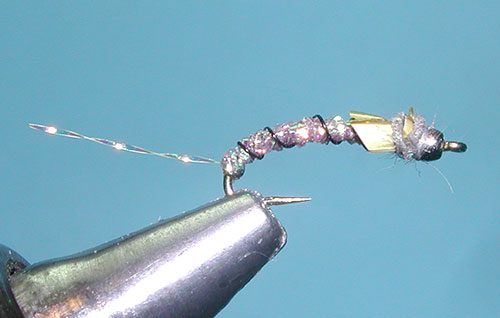
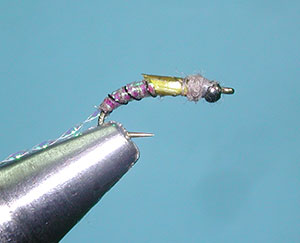
Gillie Chironomid Pupa, Dark
Tying Instructions
1. Place the bead on the hook. You will need to mash down the barb to get it to fit.
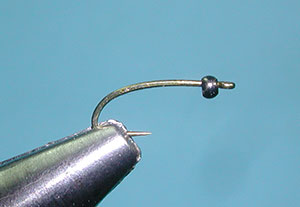
2. Attach the thread behind the bead and secure a strand of Pearl Krystalflash behind the bead wrapping the flash to the top of the hook shank back to the bend of the hook.
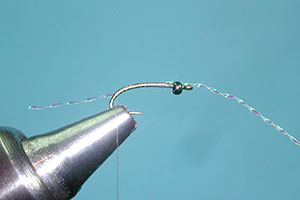
3. Wrap the thread back to the bead and secure a piece of black extra fine wire behind the bead.
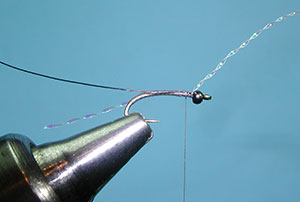
4. Secure the wire to the top of the hook shank back to the bend of the hook.
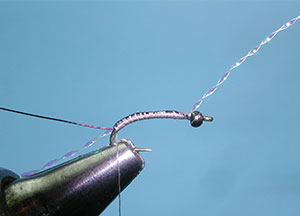
5. Apply the Superfine dubbing to the thread and tighten the dubbing around the thread. Make an initial wrap of the dubbed thread at the bend of the hook to lock in the fibers. Twist the dubbing to get a nice tight rope and wrap the dubbing forward to the bead.
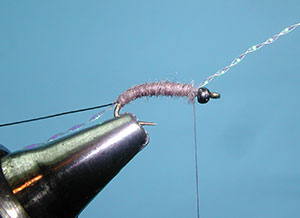
6. Take the flash behind the bead and spirol wrap to the bend of the hook and back to the bead. Some dubbing might protrude between the wraps and that’s a good thing. Secure the flash with thread wraps behind the bead.
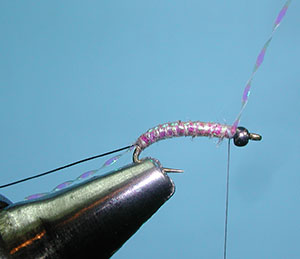
7. Counterwrap the black wire forward from the bend of the hook to the bead and secure with some thread wraps.
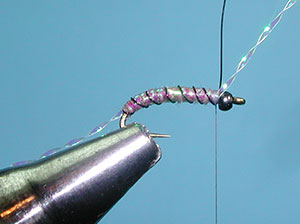
8. Trim off the tag ends of the flash and the wire. Add some more thread wraps to secure the tag ends of these materials. Place two Turkey Biots on each side of the shank behind the bead with the concave side facing inward. Secure with thread wraps just behind the bead.
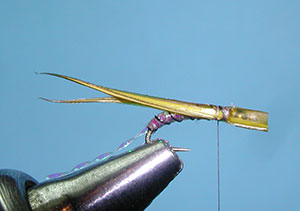
9. Trim the biots with an upward slant cut. The length of the trimmed biots should not exceed half of the hook shank. Trim off the tag ends of the biots just behind the bead and secure with more thread wraps.
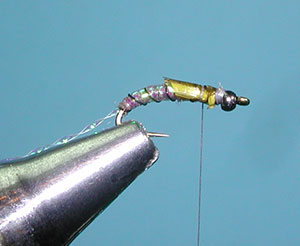
10. Build a dubbed collar behind the bead to represent a swollen wingcase.
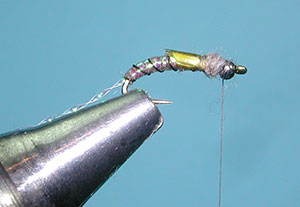
11. Secure the thread a whip finish.
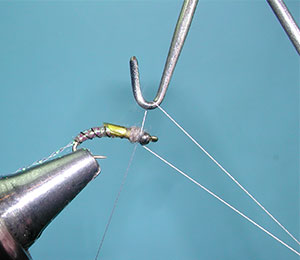
12. Trim off the thread. The Finished Drifter’s Gillie, Dark.
| Materials
to Order Material, click the link |
|
|---|---|
| Hook | TMC 200R #18-22 |
| Thread | Veevus 16/0 Gray |
| Head | 1/16 Black Cyclop Bead |
| Overbody | Pearl Krystalflash |
| Body | Adams Gray Superfine |
| Shuck | Single Strand Pearl Krystalflash |
| Collar | Adams Gray Superfine |
| Wingpads | Blue Wing Olive Turkey Biots |
| Ribbing | X-Small Black Wire |
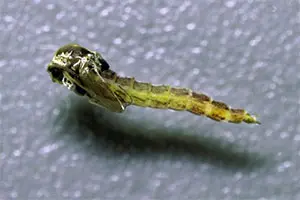
Drifter’s Chironomids
During the 1990’s, a local guide service in Mammoth, Sierra Drifters, developed a series of Drifter’s Chironomids for Crowley Lake. These were variations of the TDC (Thompson Delectable Chironomid) pattern utilizing Superfine dubbing for the body, a beadhead, and wire ribbing. The guide, Tom Loe, would add a strand of Pearl Krystalflash to the end of the pattern for attraction and a trailing shuck.
Gillies
By adding Turkey Biots behind the bead, these variations became known as hisGilliepatterns. The Gillies, over the years, have transformed to a thinly dubbed body with a krystalflash overbody (dark) or with a thread body coated with a finish (light) and a black wire ribbing. No longer do they appear to be similar to the TDC but have become a pattern within it’s own. However, Tom still ties hisChironomid Pupapatterns using the dubbed body .
Broke Back Articulates
Sierra Drifters added a number of other patterns to their arsenal of Drifter’s Chironomids. The Broke Backseries is an articulated midge using a tippet connector to a smaller hook size with the point snipped off. This articulation provided movement to the midge similar to the natural working its way up the water column. TheChironomid Emergerpatterns originally had a dubbed body but eventually the patterns were adapted to a thread body and a Krystalflash overbody. White Antron yarn is used for both the gills and the trailing shuck. This is a material used on other pupa emerger patterns, such as buzzers and zebra midges.
Dubbed Zebra
Zebramidges were commonly built as a thread body midge with Silver or Copper wire ribbings. Drifters had a pattern that was named aDubbed Zebrausing Hares Ear dubbing for the body and a Silver Wire ribbing. This is very unusual for a Zebra pattern. When Zebra patterns were first introduced to the Eastern Sierra, they had a Silver wire ribbing and were typically a thread body. If you applied a Copper wire ribbing, it was known as aTigerMidge. Today, Zebra’s can have either Silver or Copper ribbing and the Tiger Midge is often used interchangeably with the Zebra Midge name. Drifter’s has a Tiger Midge using a Red Wire but you will find Zebra patterns also using this red wire as well.
Variations
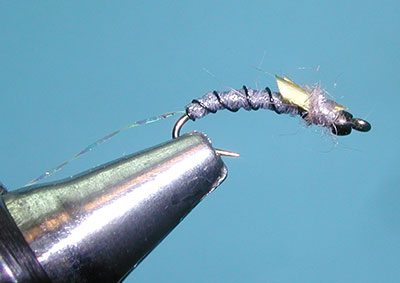
Gillie Chironomid Pupa Light
| Hook | TMC 200R #18-22 |
| Thread | Veevus 16/0 Gray |
| Head | 1/16 Black Cyclop Bead |
| Body | Veevus 16/0 Graycoated with Loon's Fly Finish, Flow |
| Shuck | Single Strand Pearl Krystalflash |
| Collar | Adams Gray Superfine |
| Wingpads | Blue Wing Olive Turkey Biots |
| Ribbing | X-Small Black Wire |
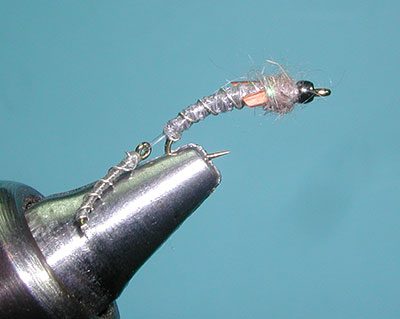
Drifter’s Broke Back Gillie Pupa
| Hook | TMC 200R #18-22 |
| Thread | Veevus 16/0 Gray |
| Head | 1/16 Black Cyclop Bead |
| Body | Veevus 16/0 Graycoated with Loon's Fly Finish, Flow |
| Connector | 6X |
| Shuck | One size smaller beadless pupa of a thread body and silver wire ribbing with hook point cut off. Hook: TMC 200R #18-22 Thread: Veevus 16/0 Gray, Ribbing: X-Small Silver Wire |
| Collar | Adams Gray Superfine |
| Wingpads | Callibaetis dyed Turkey Biots |
| Ribbing | X-Small Silver Wire |
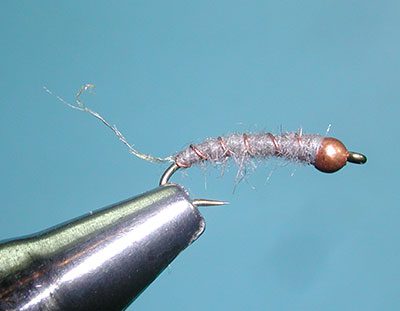
Drifter’s Chironomid Pupa Copper
| Hook | TMC 200R #18-22 |
| Thread | Veevus 16/0 Gray |
| Head | 1/16 Copper Cyclop Bead |
| Body | Adams Gray Superfine |
| Shuck | Single Strand Pearl Krystalflash |
| Ribbing | Small Copper Wire |
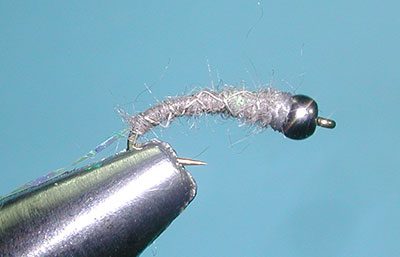
Drifter’s Chironomid Pupa Black
| Hook | TMC 200R #18-22 |
| Thread | Veevus 16/0 Gray |
| Head | 1/16 Black Cyclop Bead |
| Body | Adams Gray Superfine |
| Shuck | Single Strand Pearl Krystalflash |
| Ribbing | X-Small Silver Wire |
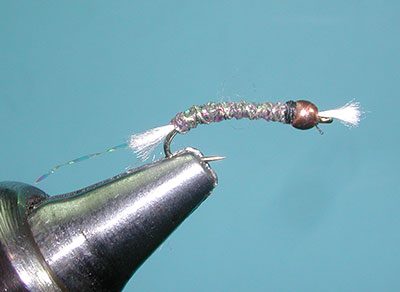
Drifter’s Chironomid Emerger Copper
| Hook | TMC 200R #18-20 |
| Thread | Veevus 16/0 Black |
| Head | 1/16 Copper Cyclop Bead |
| Overbody | Pearl Krystalflash |
| Body | Veevus 16/0 Black |
| Shuck | Single Strand Pearl Krystalflash and Fl. White Antron |
| Gills | Fl. White Antron |
| Ribbing | X-Small Silver Wire |
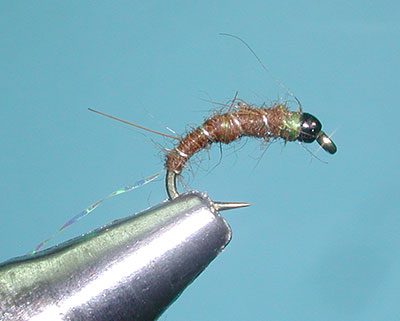
Crystal Black Olive Dubbed Zebra
| Hook | Daiichi 1130 #18-22 |
| Thread | Veevus 16/0 Olive |
| Head | 1/16 Black Cyclop Bead |
| Body | Hare's Ear Plus, Olive Brown |
| Shuck | Single Strand Pearl Krystalflash |
| Collar | Veevus 16/0 Olive |
| Ribbing | X-Small Silver Wire |
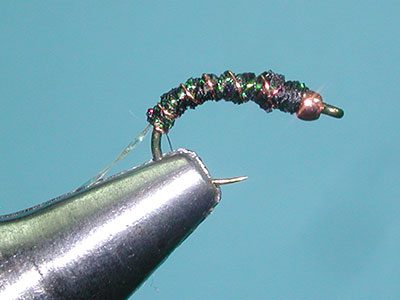
Crystal Black Zebra Midge
| Hook | TMC 2488H #18-22 |
| Thread | Veevus 16/0 Black |
| Head | 1/16 Copper Cyclop Bead |
| Overbody | Green Krystalflash |
| Body | Veevus 16/0 Black |
| Shuck | Single Strand Pearl Krystalflash |
| Ribbing | Small Copper Wire |
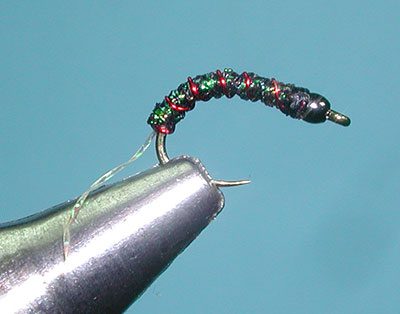
Black Crystal Tiger Midge
| Hook | TMC 2488H #18-22 |
| Thread | Veevus 16/0 Black |
| Head | 1/16 Black Cyclop Bead |
| Overbody | Green Krystalflash |
| Body | Veevus 16/0 Black |
| Shuck | Single Strand Pearl Krystalflash |
| Ribbing | Small Red Wire |