
Sub-Total: $0.00
Euro Nymphs – offer is quick and deadly
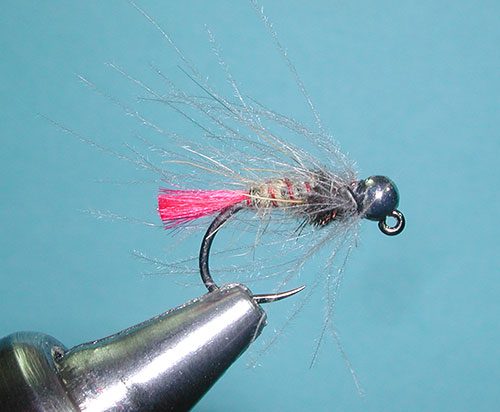
CDC Red Tag
Tying Instructions
1. Slide a slotted tungsten bead (small round opening first) onto the hook. Place in the vice and slide the bead forward up against the hook eye. Twist the bead as necessary so the rounded end of the slot is at the top of the hook shank.
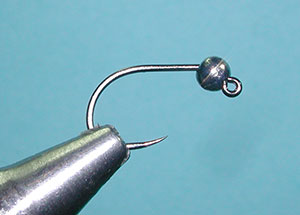
2. Attach the thread behind the bead and lock the bead into position behind the eye with thread wraps. Lay a thread foundation to the bend of the hook and bring the thread back to the mid point of the shank.
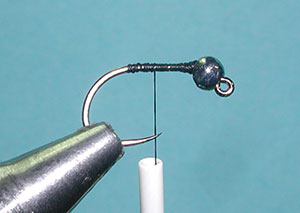
3. Clip a piece of 4-strand Danville Floss from the spool and place the center of the floss on the thread. Wrap the thread around the shank, locking the floss to the top of the hook shank.
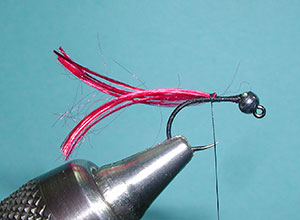
4. Keep the floss ends even and wrap the thread securing the floss to the bend of the hook. Clip off the tag ends of the floss. The end of the tag should be just beyond the end of the hook. This is subjective, you can have shorter tag or a longer one.
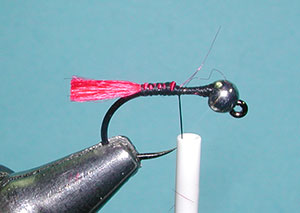
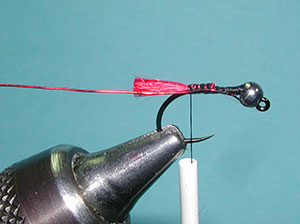
5. Attach a red wire to the bottom of the hook shank secureing the wire from behind the bead to the bend of the hook.
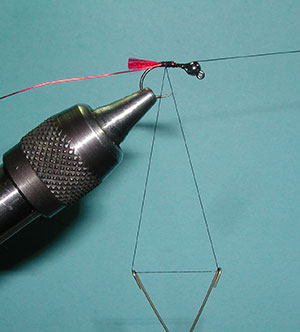
6. Create a dubbing loop at the bend of the hook.
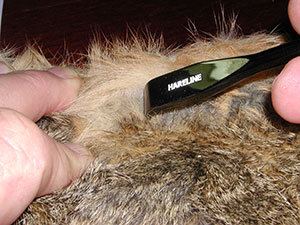
7. Remove some Red Fox fur for dubbing. I’m using a Hareline Ceramic Zirconia Dubbing Rake to get the proper blend of underfur and guard hairs.
8. Place the dubbing inside the dubbing loop and spin. I’m using a Stonfo Rotodubbing Twister which quickly creates a spikey dubbed thread segment that I can wrap up to just behind the bead and tie off with thread wraps. Clip off the tag end of the dubbed segment and secure with thread wraps.
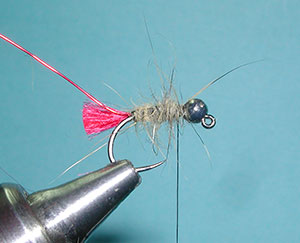
9. Wrap the wire ribbing forward with about four spirol wraps to the thorax area and secure with thread wraps. Break off the tag end of the wire with a “helicopter” motion and secure with some additional thread wraps. Wrap the thread behind the bead for a thorax region.
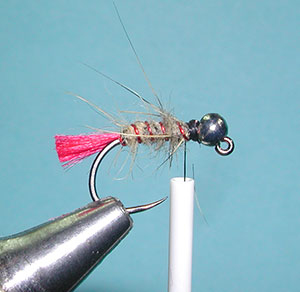
10. Attach a strand of peacock herl by the tip on the thorax area securing the herl to the top of the hook shank behind the bead..
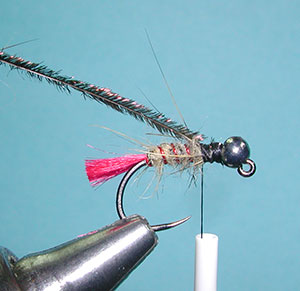
11. Wrap a thorax with the herl, 4-5 turns should do it. Secure the herl just behind the bead with thread wraps and trim off the tag ends.
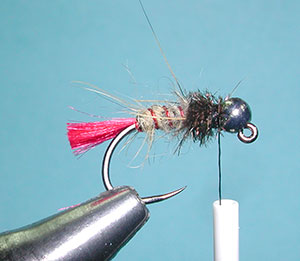
12. Select a long CDC plume feather and attach the feather by the tip just behind the bead. Once secured, trim off the CDC fibers that extend from the end of the tip.
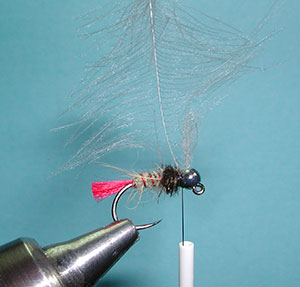
13. Holding the quill of the CDC feather, preen back the fibers with your thumb and index finger as you wrap the quill around the back of the bead. On the last turn of the feather, secure with 2 tight thread wraps and trim off the tag end.
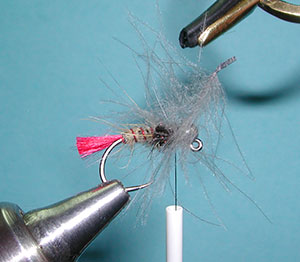
14. Whip Finish.
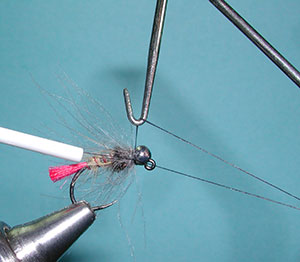
15. The finished CDC Red Tag.
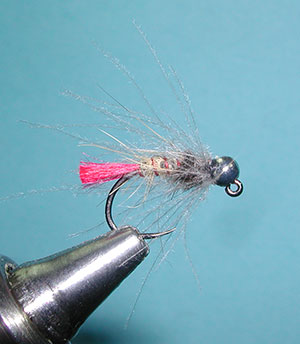
| Materials
to Order Material, click the link |
|
|---|---|
| Hook | Firestick #551 #12-16 |
| Thread | Veevus 10/0, Black |
| Head | Slotted Silver or Gold Tungsten |
| Ribbing | Red Wire Medium |
| Body | Fox Squirrel Dubbing or Fox Squirrel Fur |
| Tail | Danville Floss, Red |
| Thorax | Peacock Herl |
| Collar Hackle | CDC Medium Gray Dun |
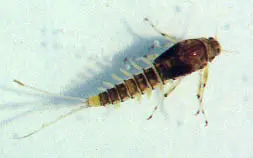
Euro Nymphs
Euro Nymphs are generally a nymph with an oversized tungsten bead and some leadfree wire behind the bead. They are tied on wide gap competition style hooks, particularly jig hooks, utilizing a sparse amount of body materials. The focus of Euro Nymphs is to sink fast to the slower currents of the bottom and stay there throughout the drift. The patterns are tied with a broad range of bead sizes to accommodate a variety of water speeds, depths, and types of water. This chart will assist you in selecting the proper bead.

To keep track of the bead weight that is being used, some will color code their flies with a thread collar. Within the above chart, you could use Orange thread for the lighter beads, Red thread for the medium beads, and Dark Brown thread for the heavy beads. This will give you three weight possibilities for each hook size. Another method is to purchase a gram scale (0.01g accuracy). These scales cost only about $20.00 and will give you an accurate weight for the nymph rig you use.
Many Patterns
I have many euro nymphs listed within the Fly Fishing the Sierra flybox such as Egan’s Iron Lotus, Rainbow Warrior, and his Frenchie; Walt’s Worm, Olson’s Blowtorch, Perdigon, and TP’s Skinny Nelson. These are streamlined and heavily weighted to reach the bottom fast. The patterns could represent mayfly or caddis nymphs or just an attractor. Other patterns such as weighted eggs, heavy stoneflies, weighted San Juan Worms or Squirmy Wormies and Mops are also used within the Euro nymph rig.
Euro Rig
The heaviest fly can be either as a point fly or a dropper depending on how you wish to present the rig within the water column. I like to keep my heaviest fly on the dropper so that both flies are bouncing off the bottom. 3 fly rigs often end up with a lot of control issues (tangles), so I try to stay with a simple 2 fly Euro rig. This is tightline nymphing. a 3 or 4 weight rod that is 10 to 11 feet long is ideal.
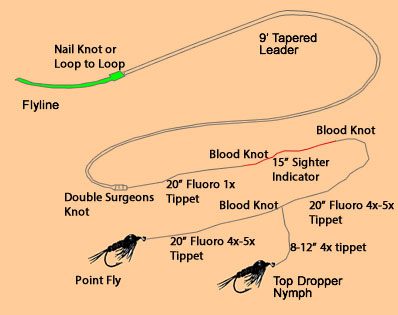
Below is an additional selection of Euro Nymphs to consider:
Variations
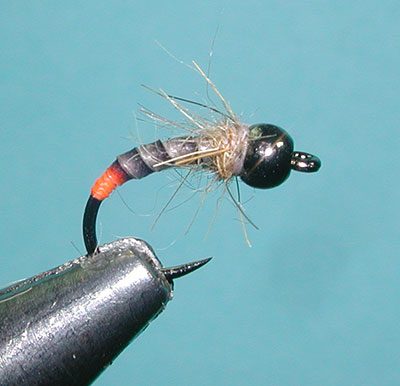
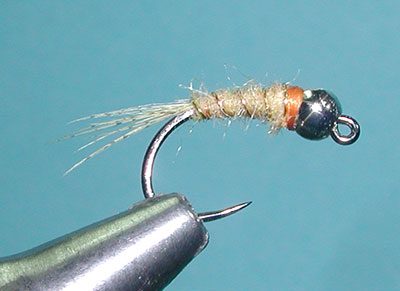
Hot Butt Nymph
| Hook | Firehole 316 #14-16 |
| Thread | Veevus Tan 10/0 |
| Head | 7/64 |
| Body | Medium Magic Quill over Veevus Tan thread underbody |
| Thorax | Hareline Dubbing Hare's Ear |
| Butt | Veevus 12/0 Fl. Orange Thread |
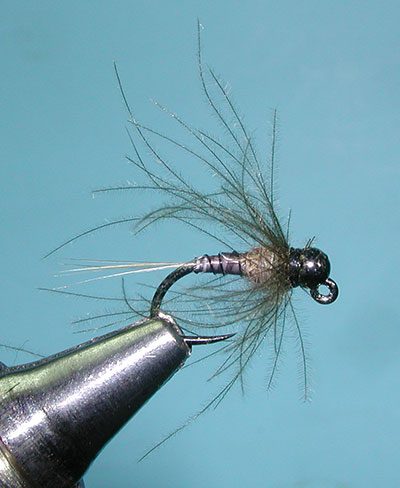
Tungsten Assassin Jig
| Hook | Firehole 516 #14-16 |
| Thread | Veevus 14/0 Black |
| Head | Slotted Tungsten Bead Black Nickel |
| Weight | .015 lead wire |
| Body | Turkey Biots Gray |
| Thorax | Hareline Dubbing Dark Hares Ear |
| Tail | Coq de Leon, Light Pardo |
| Ribbing | Extra Small Black Wire |
| Hackle Collar | CDC Baetis |
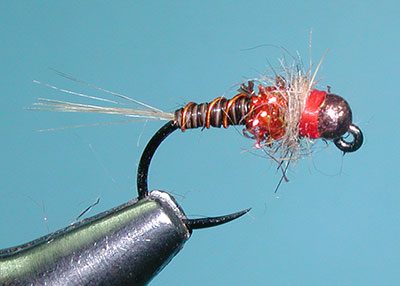
Peaches and Cream Jig
| Hook | Firestick #551 #14-16 |
| Thread | Danville 6/0 Orange |
| Head | Slotted Tungsten Gold Bead |
| Body | Light Cahill Hareline Dubbing |
| Tail | Dyed Mallard Flank, Woodduck |
| Ribbing | Small Gold Wire |
| Collar | Danville 6/0 Orange |
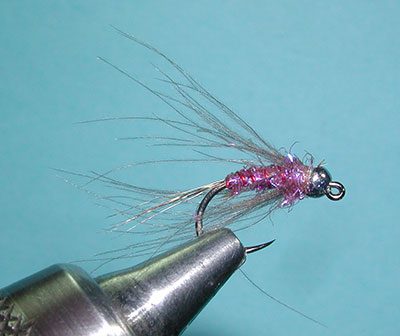
Brown Quill Jig, Hares Ear
| Hook | Firestick #551 #14-16 |
| Thread | Veevus 12/0 Dark Brown |
| Head | Slotted Tungsten Copper Bead |
| Weight | .015 leadfree wire |
| Body | Stripped Peacock Herl |
| Thorax | Rusty Brown Ice Dub and Hareline Dubbing Hares Ear |
| Tail | Coq De Leon, Light Ginger |
| Ribbing | Brassie Amber Wire |
| Collar Hot Spot | Danville 6/0 Red |
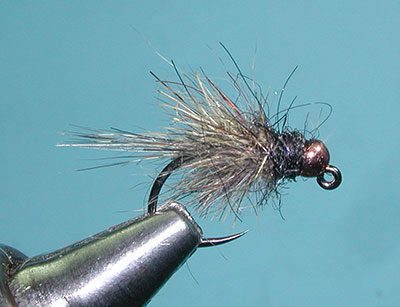
Duracell
| Hook | Firestick #551 #14-16 |
| Thread | Uni-Thread Camel 8/0 |
| Head | Slotted Tungsten Silver Bead |
| Ribbing | Small Wire, Red |
| Body | Ice Dubbing, UV Brown |
| Tail | Coq De Leon, Dark Pardo |
| Thorax | Ice Dubbing, UV Brown |
| Collar Hackle | CDC Medium Slate Dun and Ice Dubbing, UV Brown |
Jigged Brush Hog
| Hook | Firestick #551 #14-16 |
| Thread | Veevus Black 10/0 |
| Head | Copper Tungsten Bead |
| Body | Copper wire dubbing brush made with a mixture of Fox Squirrel fur, with copper lite brite and Pearl Green Arizona Diamond Hair mixed (very sparse). |
| Thorax | Black/Blue Simi Seal |
| Tail | Cog De Leon, medium pardo |