
Sub-Total: $0.00
Psycho Prince Nymph – proven as an all around champion
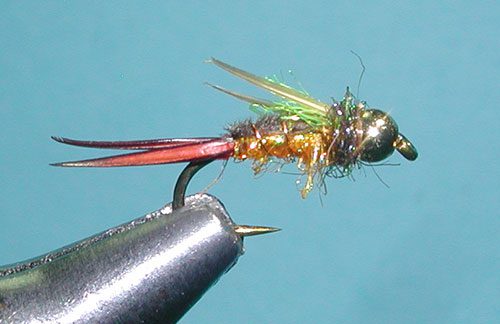
Psycho Prince Nymph (Orange)
Tying Instructions
1) Mash down the barb and slip on the bead to the hook. Attach the hook to the vise.
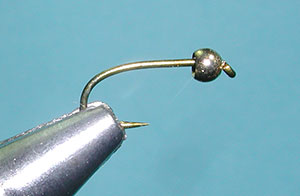
2) Attach the thread behind the bead and lay a thread foundation to the bend of the hook.
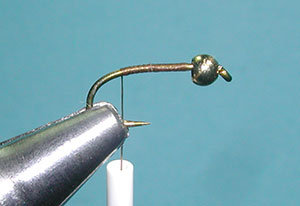
3) Clip a pair of Goose Biots and arrange the pair so that they are facing outward. Measure the length of the biots to about one hook shank in length.
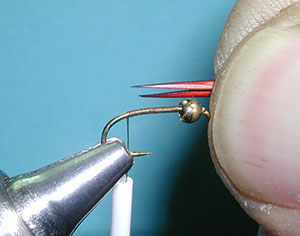
4) Secure the biots at the bend of the hook with a couple of thread wraps. The biots should straddle each side of the hook shank.
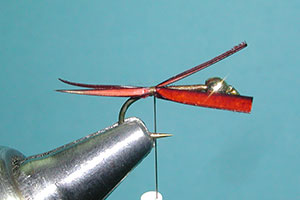
5) Secure the butt ends of the biots to the hook shank and trim off the excess material. Attach a copper wire ribbing to the top of the hook shank and secure to the tail tie in position.
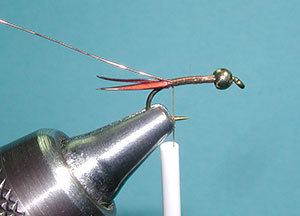
6) Clip a segment of Mottled Oak Turkey that is about one half the gap of the hook. Secure the turkey slip to the top of the hook shank in front of the tail.
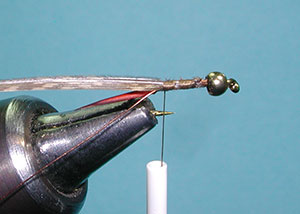
7) Apply orange ice dubbing to the thread and twist it tightly. I will lock a few strands of the ice dubbing to the shank with one wrap and twist the material around the thread for a tighter noodle.Wrap the dubbing forward creating a tapered body leaving some space between the body and the bead.
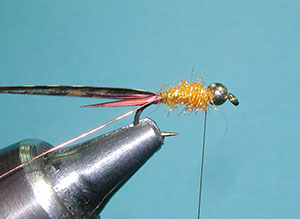
8) Bring the turkey slip over the body creating a shellback. Secure with a couple of thread wraps.
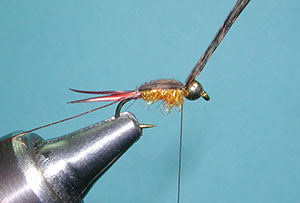
9) Wrap the copper wire ribbing forward with 4-5 wraps and secure just behind the bead. Clip off the excess turkey and wire.
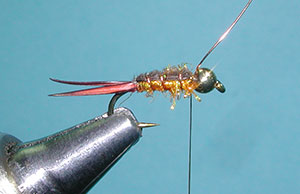
10) Clip a length of Flat Diamond Braid and secure the braid to the top of the hook shank behind the bead. Trim the braid so that the length shoud be just beyond the midpoint of the shank. This will be the wing bud.
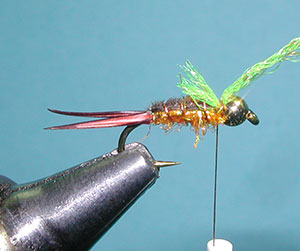
11) Trim off the tag end of the braid and apply some more orange ice dubbing to cover the base of the wing bud.
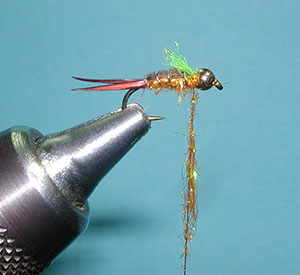
12) Clip off two Golden Stone colored biots and attach each one to the side of the wing bud behind the bead with the curve of the biot facing outward. I like to do this one at a time. Adjust the biot length so that it does not go beyond the body. Secure with a couple of tight wraps.
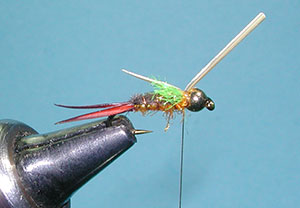
13) Attach the second biot behind the bead just to the other side of the wing bud. Secure with a couple of tight thread wraps.
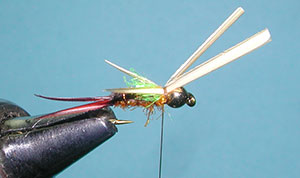
14) Biots are slippery. A small application of zap a gap at the thread will help to secure these biots. Apply 2-3 more thread wraps once the application is made.
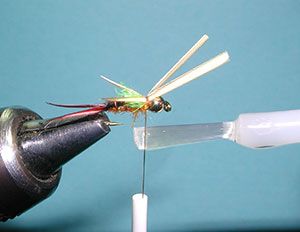
15) Trim off the excess wing strands and apply additional orange ice dubbing over the wing thread wraps. Twist some dark brown ice dubbing around the thread.
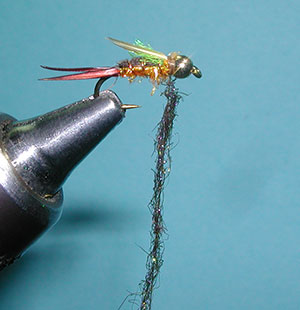
16) Wrap a couple turns of the dubbing. You can use your thumbnail to push the material behind the bead.
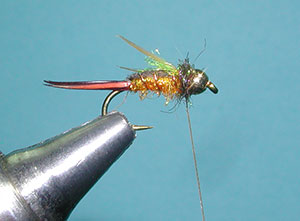
17) Whip Finish behind the bead.
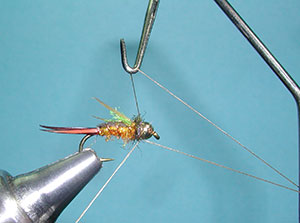
18) The finished Psycho Prince
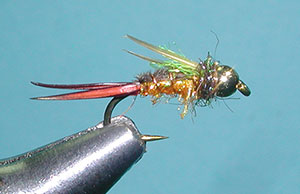
| Materials
to Order Material, click the link |
|
|---|---|
| Hook | TMC 3769, sizes 12-18 |
| Thread | 10/0 Veevus Rusty Brown |
| Head | Gold Tungsten Bead |
| Body | Ice Dubbing, Orange |
| Tail | Dark Brown Goose Biot |
| Collar | UV Brown Ice Dubbing |
| Shellback | Mottled Oak Turkey Tail |
| Wing | Goose Biots, Golden Stone |
| Wingbud | Yellow Flat Diamond Braid |
| Ribbing | Small Copper Wire |
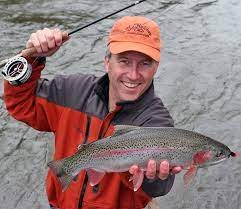
Mike Mercer
Psycho Prince Nymph
I posted this pattern within the Prince Nymph pattern as a variation many years ago. However, it has taken a life on it’s own and deserves it’s own page. Since Mike Mercer introduced this pattern in 2011, it has become a popular attractor nymph primarily due to it’s success in catching not only trout but steelhead, bass, and salmon. When Ice Dubbing was introduced by Hareline in the late 1990’s, Mike experimented with the product as a triggering material for his series of Trigger Nymphs. The ice dubbing mimicked an expanding wingbud about to burst open.
Trigger Mechanisms
Since the Prince Nymph had it’s own sets of triggering mechanisms, ie the contrasting biots for the wings and tails, Mike wanted to create a variation of the prince nymph using the ice dubbing as a body and collar. The initial patterns were ineffective as the bodies had too much flash to them. Mike added a shellback of Turkey Tail to hide about 40 to 50% of the dubbing. Not only did this reduce the flash of the pattern but it also gave the pattern the contrast between the darker dorsal portion of the body and a lighter underbelly.
Other Parts
The original Prince Nymph had a tinsel ribbing. Mike kept the ribbing but changed it to wire since the wire gave a good segmentation appearance to the dubbed body. The Prince Nymph also has soft hackle for legs but Mike felt that the ice dubbing strands that extend from the collar would produce the same effect. Mike had used Fluoro fiber, Angel Hair and Lite Brite for material the wingbud. Some of this material is slippery and difficult to control. With the introduction of Flat Diamond Braid, the braid is a good alternative material for the wingbud.
Colorations
Probably the most popular color for the Psycho Prince is Purple but the other colorations work as well and might be a better choice at a certain time and place. Beadheads are mandatory for the Psycho Prince. They provide a good weight source, particularly when additional lead wraps are applied behind the bead. They also provide a very clean appearance to the head when all of the thorax materials such as the wing buds, wings, and shellback materials are tied in. The collar of Brown or Rusty Brown Ice Dubbing hides these tie-in wraps and the bead provides a good means to tuck those final whip finish wraps behind it. The beads are usually Gold but Copper is often used as well. Bead suggestions: 7/64″ for size 12, 3/32″ for size 14-16, and 5/64″ for size 18.
Variations
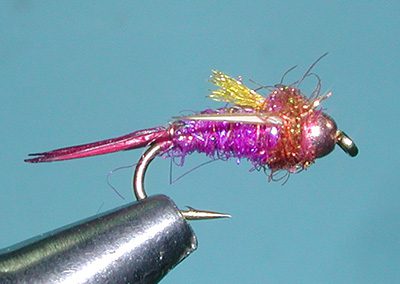
Psycho Prince (Purple)
| Hook | TMC 3769, sizes 12-18 |
| Thread | 10/0 Veevus Rusty Brown |
| Head | Gold Tungsten Bead |
| Body | Ice Dubbing, Purple |
| Tail | Dark Brown Goose Biot |
| Collar | Rusty Brown Ice Dubbing |
| Shellback | Mottled Oak Turkey Tail |
| Wing | Goose Biots, Golden Stone |
| Wingbud | Yellow Fluoro Fiber |
| Ribbing | Small Copper Wire |
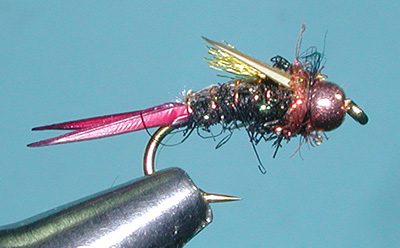
Psycho Prince (Black)
| Hook | TMC 3769, sizes 12-18 |
| Thread | 10/0 Veevus Rusty Brown |
| Head | Copper Tungsten Bead |
| Body | Ice Dubbing, Black |
| Tail | Dark Brown Goose Biot |
| Collar | Rusty Brown Ice Dubbing |
| Shellback | Mottled Oak Turkey Tail |
| Wing | Goose Biots, Golden Stone |
| Wingbud | Yellow Fluoro Fiber |
| Ribbing | Small Copper Wire |
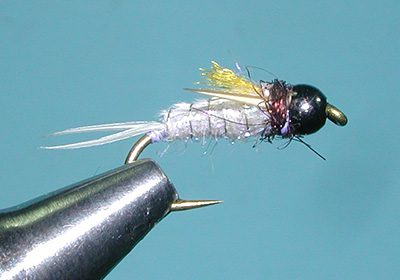
Psycho Prince (White)
| Hook | TMC 3769, sizes 12-18 |
| Thread | 10/0 Veevus Rusty Brown |
| Head | Black Tungsten Bead |
| Body | Ice Dubbing, UV Pearl |
| Tail | White Goose Biot |
| Collar | Chocolate Brown Ice Dubbing |
| Shellback | White Turkey Round |
| Wing | Goose Biots, Golden Stone |
| Wingbud | Yellow Fluoro Fiber |
| Ribbing | Small Silver Wire |
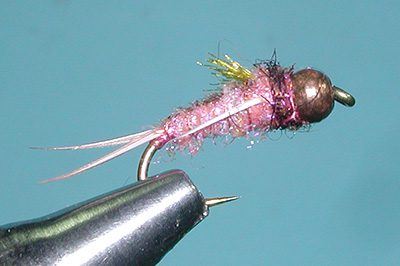
Psycho Prince (Dirty Pink)
| Hook | TMC 3769, sizes 12-18 |
| Thread | 10/0 Veevus Rusty Brown |
| Head | Copper Tungsten Bead |
| Body | Ice Dubbing, UV Pink and Ice Dubbing, UV Cinnamon Blend |
| Tail | Turkey Biots, Dark Tan |
| Collar | Rusty Brown Ice Dubbing |
| Shellback | Cinnamon Tip Turkey |
| Wing | Turkey Biots, White |
| Wingbud | Yellow Fluoro Fiber |
| Ribbing | Small Copper Wire |
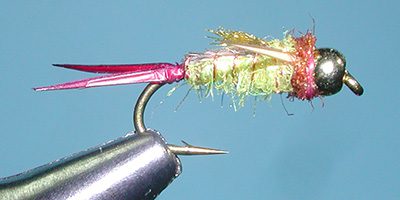
Psycho Prince (Yellow)
| Hook | TMC 3769, sizes 12-18 |
| Thread | 10/0 Veevus Rusty Brown |
| Head | Gold Tungsten Bead |
| Body | Ice Dubbing, Hot Yellow |
| Tail | Dark Brown Goose Biot |
| Collar | Rusty Brown Ice Dubbing |
| Shellback | Mottled Oak Turkey Tail |
| Wing | Goose Biots, Golden Stone |
| Wingbud | Yellow Fluoro Fiber |
| Ribbing | Small Copper Wire |
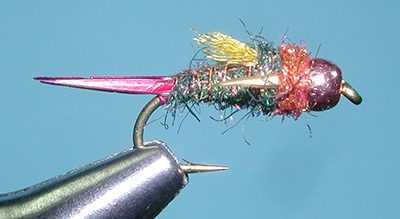
Psycho Prince (Peacock)
| Hook | TMC 3769, sizes 12-18 |
| Thread | 10/0 Veevus Rusty Brown |
| Head | Copper Tungsten Bead |
| Body | Ice Dubbing, Peacock |
| Tail | Dark Brown Goose Biot |
| Collar | Rusty Brown Ice Dubbing |
| Shellback | Cinnamon Tip Turkey Tail |
| Wing | Goose Biots, Golden Stone |
| Wingbud | Yellow Fluoro Fiber |
| Ribbing | Small Copper Wire |