
Sub-Total: $0.00
Ray Charles – time tested for performance
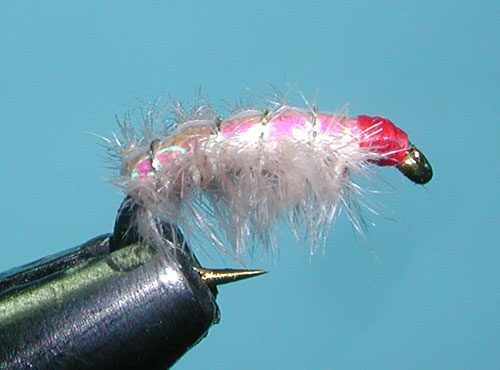
Ray Charles, Tan
Tying Instructions
1. Attach the thread about one eye length back from the hook eye and wrap to the bend of the hook and back. This gives a good thread foundation that will show through the ostrich herl and tinsel flashback.
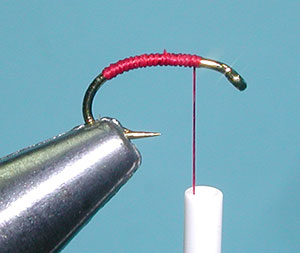
2. Attach a Extra Small Silver wire ribbing to the top of the hook shank and secure to the bend of the hook. Wrap the thread bark to behind the eye.
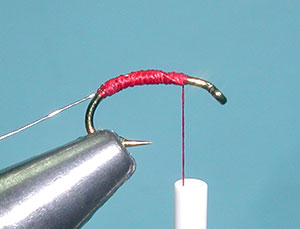
3. Attach the Pearlescent Tinsel to the top of the hook shank with the sides of the tinsel enclosing the shank. Keep the tinsel centered fo the top of the shank and secure the tinsel along the shank to the bend of the hook. A loose wrap that is tightened by pulling directly down will keep the tinsel from shifting off center.
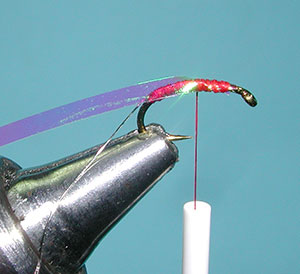
4. Match up the bases of three Ostrich herl and clean the fibers from the base of the herls. The exposed quill base is secured to the hook shank with thread wraps.
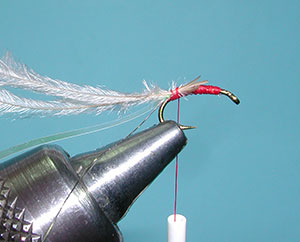
5. Wrap the herl forward orienting the fibers so that they do not get captured by the wraps.
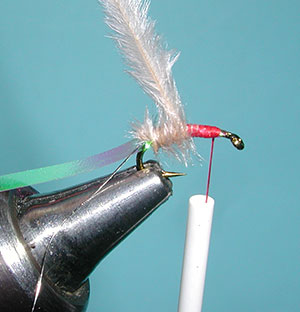
6. Wrap the herl forward to just behind the eye and secure with a couple of tight thread wraps.
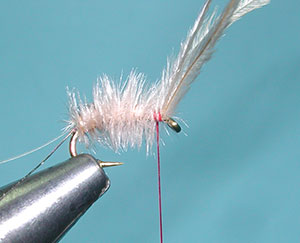
7. Bring the Pearlescent tinsel over the shank and secure the tinsel just behind the eye with a couple of tight thread wraps.
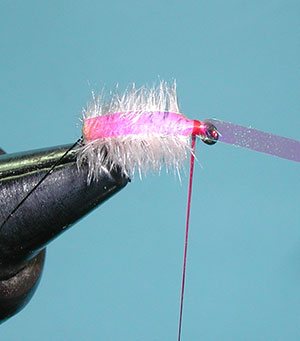
8. Bring the tag end of the tinsel back towards the rear and trim off the tag end close to the eye.
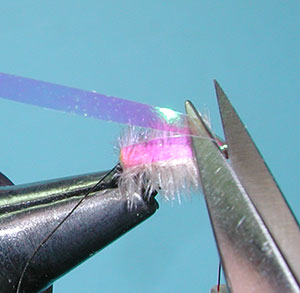
9. Wrap the Silver Wire forward with 5-6 turns and secure the wire behind the eye of the hook.
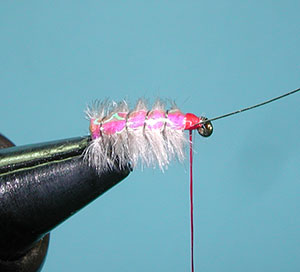
10. Wrap a full head to the pattern and apply a whip finish.
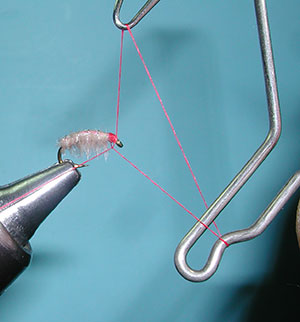
11. Apply some head cement.
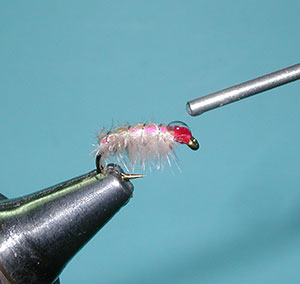
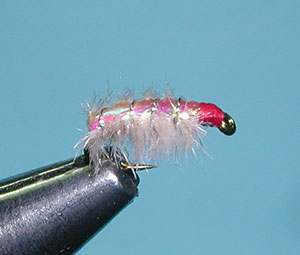
12. The finished Ray Charles.
| Materials
to Order Material, click the link |
|
|---|---|
| Hook | TMC 2457, #14-18 |
| Thread | Danville Red 6/0 |
| Head | Danville Red 6/0 |
| Body | Tan Ostrich Herl |
| Flashback | Pearl Tinsel, Medium |
| Ribbing | Extra Small Silver Wire |
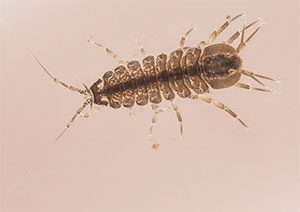
Ray Charles
The “Ray Charles” is an excellent pattern for a sow bug. It originated in Montana as a guide fly in the early 1990’s on the Big Horn River. According to one story, a client asked the guide the origin of the name and the guide replied it was named since “even a blind man can catch fish with this fly”. The pattern quickly became popular on other rivers that have a good sow bug population like the Crooked and Deschutes.
A sow bug is not a scud and this pattern differentiates the two. Tan and Gray are popular colors, particularly in size 16. and should be fished near the stream bottom. After 30 years on the Big Horn, the Ray Charles is still one of the top producing patterns. The wire ribbing was added sometime later in it’s history to protect the Ostrich Herl from unraveling.
Later, with the introduction of the UV resin products, the wire has been replaced with a coating of thick Fly Finish covering the flashback material and the head. This gives a very durable aspect to the pattern. The soft hackle variation has been highly effective in showing the fish something different and will be used as a point fly with a dropper. Grey and Pink are popular soft hackle colorations utilizing a orange “hot colored” bead.
Variations
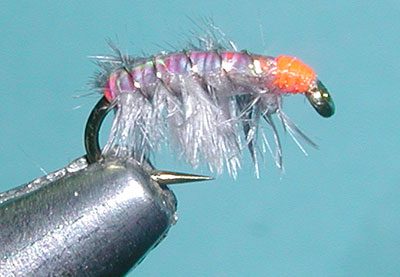
Ray Charles, Gray
| Hook | TMC 2457, #14-18 |
| Thread | Veevus 12/0 Hot Orange |
| Head | Danville Red 6/0 |
| Body | Gray Ostrich Herl |
| Flashback | Pearl Flashabou |
| Ribbing | Extra Small Silver Wire |
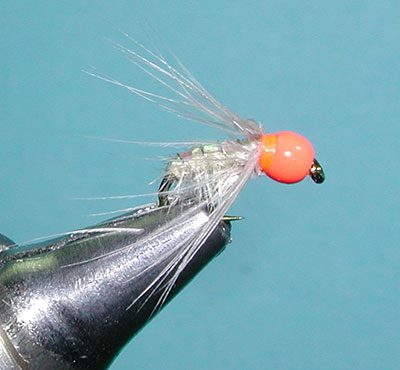
Firebead Ray Charles, Soft Hackle, Gray
| Hook | TMC 2457, #14-18 |
| Thread | Veevus 12/0 Hot Orange |
| Head | Fire Orange Dazzle Bead |
| Body | Gray Ostrich Herl |
| Flashback | Pearl Flashabou |
| Collar | Hen Cape Hackle Light Dun |
| Ribbing | Extra Small Silver Wire |
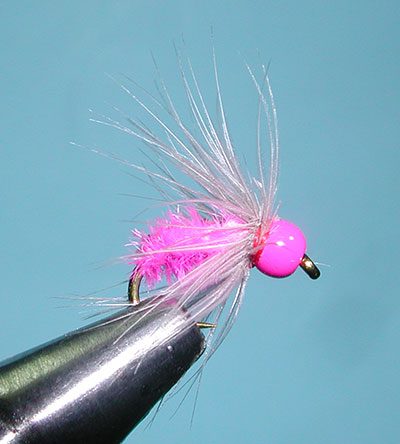
Firebead Ray Charles, Soft Hackle, Pink
| Hook | TMC 2457, #14-18 |
| Thread | Danville Red 6/0 |
| Head | Hot Pink Dazzle Bead |
| Body | Pink Ostrich Herl |
| Flashback | Pearl Flashabou |
| Collar | Hen Cape Hackle Light Dun |
| Ribbing | Extra Small Silver Wire |
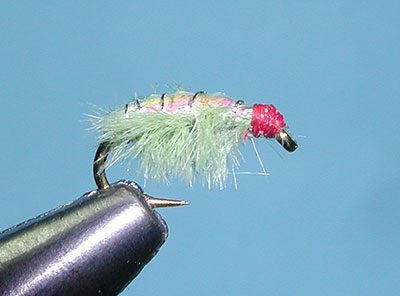
Ray Charles, Scud Grey Olive
| Hook | TMC 2457, #14-18 |
| Thread | Danville Red 6/0 |
| Head | Danville Red 6/0 |
| Body | Scud Grey Olive Ostrich Herl |
| Flashback | Pearl Flashabou |
| Ribbing | Extra Small Silver Wire |
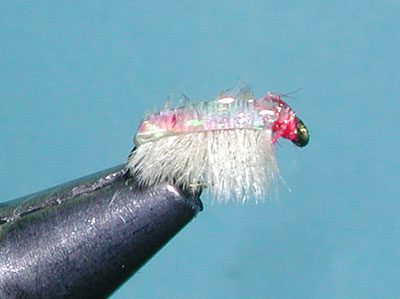
Ray Charles, Tan
| Hook | TMC 2457, #14-18 |
| Thread | Danville Red 6/0 |
| Head | Danville Red 6/0 |
| Body | Tan Ostrich Herl |
| Flashback | Pearl Flashabou coated with Loon UV Fly Finish Thick |