
Sub-Total: $0.00
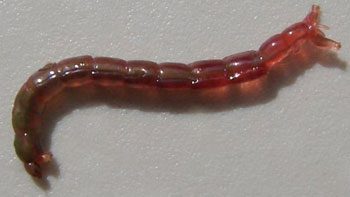
San Juan Worm – imitation of a genuine midge
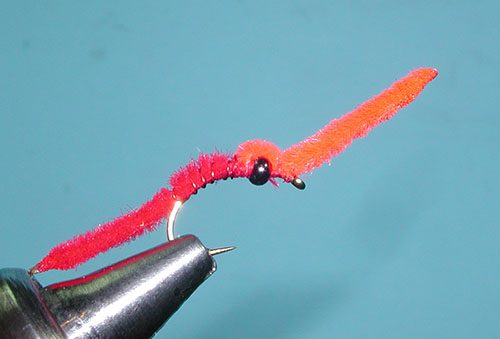
San Juan Worm, Red/Orange
Tying Instructions
1. Slip the bead onto the hook and place the hook in the vise.
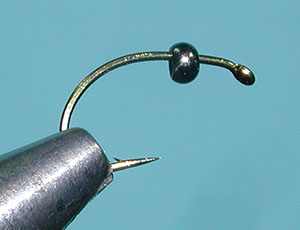
2. Attach the thread behind the bead a couple of eye lengths behind the eye. Lay a thread foundation to the middle of the bend on the hook. Attach a wire rib to the bottom of the hook shank and wrap the thread to the middle of the bend again.
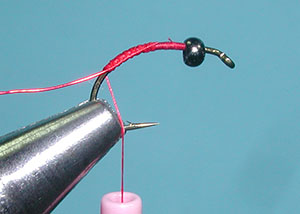
3. Tie in a section of ultra chenille at the middle bend of the hook with a couple of overlapping thread wraps. The chenille should extend behind the hook about 1.5 x’s the hook gap.
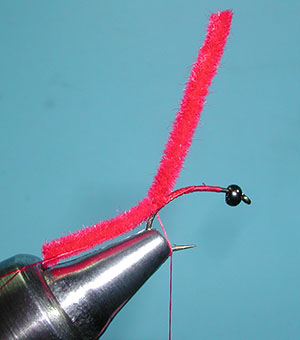
4. Move thread forward and pull the Ultra Chenille over the top of the hook anchoring the material with a couple of thread wraps at the top of the bend.
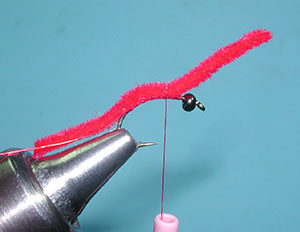
5. Wrap the wire ribbing forward with 4-5 evenly spaced spirol wraps. Secure with thread wraps and trim off the tag end of the wire.
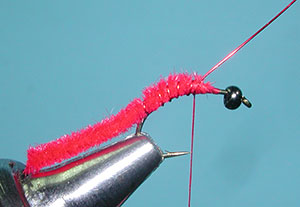
6. Attach a second piece of Ultra Chenille at the top of the hook shank in the same area that the lower section ended.
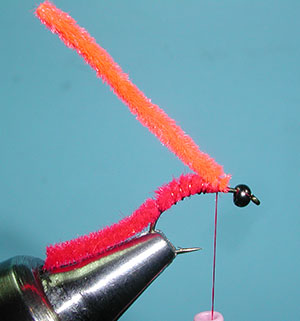
7. Secure with thread wraps and whip finish.Cut off thread.
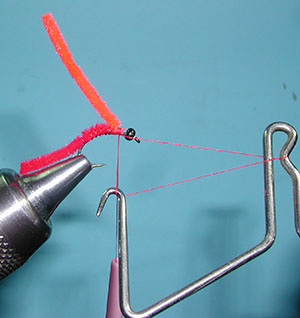
8. Slip the bead over the secured ends of both chenilles and reattach the thread in front of the bead.
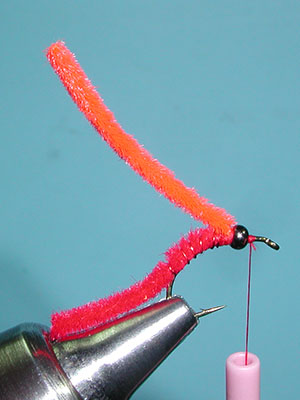
9. Pull the top chenille over the bead and secure this piece just in front of the bead with a couple of wraps. Wrap the thread around the hook shank to just behind the eye.
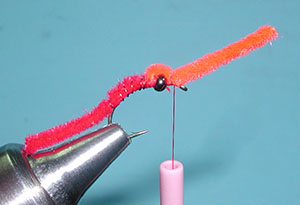
10. Apply a couple of whip finishes and trim off the thread.
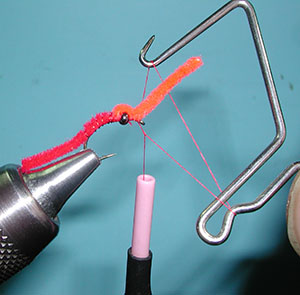
11. Burn the ends of the chenille by bringing the flame close by. You want to sear the ends to a point without leaving any black soot marks.
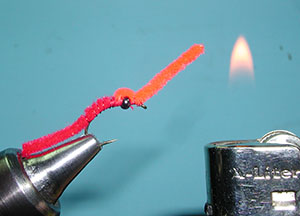
12. The finished San Juan Worm.
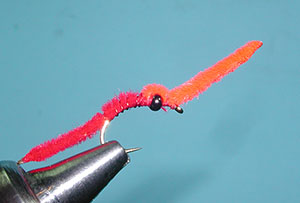
| Materials
to Order Material, click the link |
|
|---|---|
| Hook | Daiichi 1130, sizes 10-16 |
| Thread | Danville Red 6/0 |
| Weighted | Black Tungsten Bead |
| Body | Red and Hot Orange Ultra Chenille |
| Ribbing | Small Red Wire |
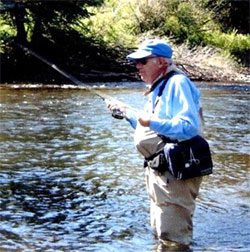
Jim Aubrey
San Juan Worm
The San Juan Worm originated with Jim Aubrey in the 1970’s. Jim was a well-known fly tier and fisherman attending many FFI conclaves were he was involved in teaching fly fishing. He also taught school kids and adults in Durango, Colorado and Albuquerque, New Mexico. Jim passed away at the age of 90 years in 2021.
Ultra Chenille
The actual San Juan Worm is about two inches and resides with the silty river bottom of the San Juan River, New Mexico. Jim utilized Ultra Chenille for the body and burned the ends of the material to keep it from unfraying. The pattern was the impetus to the infamous “San Juan Shuffle”, in which fly fishermen used to scuff along the bottom to dislodge the worms and create a feeding frenzy with the local trout inhabitants. This technique has become “unsporting” and is not looked upon favorably by most fly fishermen. Nevertheless, the San Juan Worm pattern has found a niche in most flyboxes.
Blood Midge
In the Sierra, it imitates the blood midge which frequents many of the eastside alkaline lakes. It also is used as a midge larvae patterns within most of the Sierran streams. The pattern is particularly useful when fishing in high water situations after a rainstorm. The natural terrestrial worms will become evident within the stream from bank erosion and the leaf worms will be washed into the stream from the overhead cover by the rain. The stained conditions of the water at this time also enhances it’s usefulness and darker colors such as Purple and Red might be a good choice.
Try other colors
Colors can vary from Orange, Chartreuse, Tan, Claret, Pink, Red, or Earth tones. Add a bead to the hook shank to get the pattern to go deeper in the water column or during fast stream flows. Use a slow twitching action. The San Juan Worm with a tungsten bead has become a popular anchor fly pattern for euro nymphing.
Variations
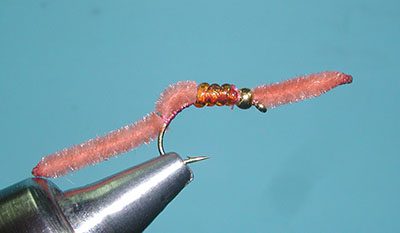
San Juan Worm , Worm Brown
| Hook | Daiichi 1130, sizes 10-16 |
| Thread | Uni-thread Rusty Brown 8/0 |
| Weighted | Gold Tungsten Bead |
| Body | Ultra Chenille, Worm Brown |
| Clitellum | Medium Amber D-Rib |
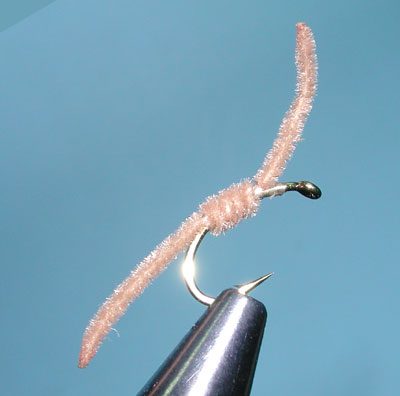
Tan San Juan Worm
| Hook | Daiichi 1120, sizes 10-16 |
| Thread | Danville Tan 6/0 |
| Body | Tan Ultra Chenille |
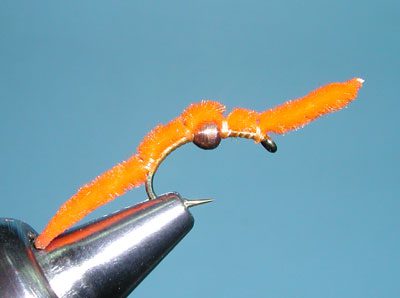
Orange San Juan Worm w/bead
| Hook | Daiichi 1120, sizes 10-16 |
| Thread | Danville Fire Orange 6/0 |
| Weighted | Brass Cyclop Bead |
| Body | Orange Ultra Chenille |
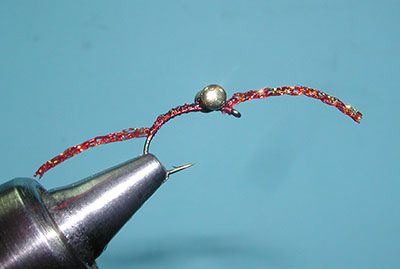
Rust Diamond Braid San Juan Worm w/Hourglass Bead
| Hook | Daiichi 1130, sizes 10-16 |
| Thread | Uni-thread Rusty Brown 8/0 |
| Weighted | Hourglass Bead |
| Body | Midge Diamond Braid, Rust |
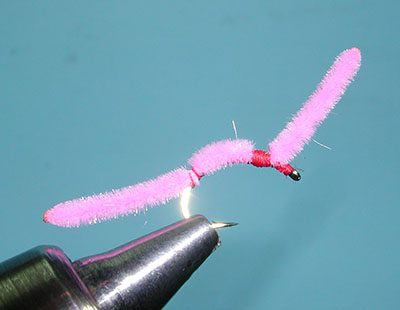
Pink San Juan Worm
| Hook | Daiichi 1130, sizes 10-16 |
| Thread | Danville Red 6/0 |
| Body | Pink Ultra Chenille |
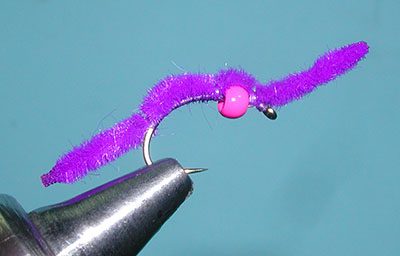
Purple San Juan Worm w/Dazzle Bead
| Hook | Daiichi 1130, sizes 10-16 |
| Thread | Danville Purple 6/0 |
| Weighted | Dazzle Bead, Fl Pink |
| Body | Purple Ultra Chenille |