
Sub-Total: $0.00
Sheep Creek Special – success with a broken renegade
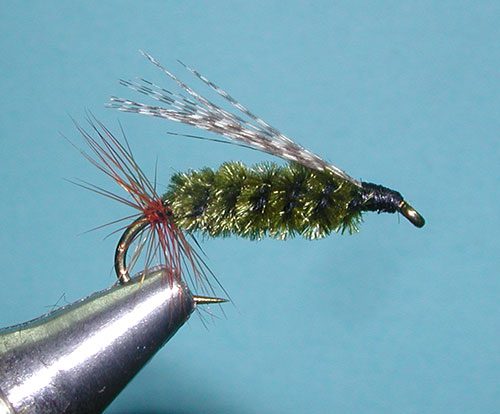
Sheep Creek Special
Tying Instructions
1. Wrap 10-15 turns of leadfree wire to the center of the hook shank.
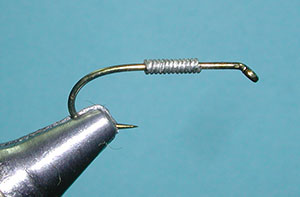
2. Attach the thread behind the eye and secure the leadfree wire with thread wraps. Build a thread taper on either side of the wire wraps.
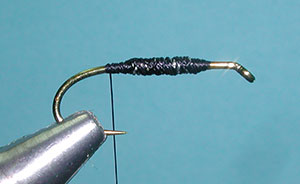
3.Select a Brown Hackle in which the fibers will just exceed the hook gap. Attach the hackle to the bend of the hook. Wrap the hackle three turns and anchor the tag end with a few thread wraps. Trim off the hackle tag end and give a few thread wraps to cover.
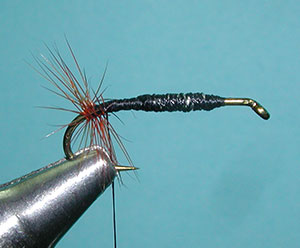
4. Now attach the chennille by removing the fuzz and exposing the threaded core. Attach the thread core just in front of the hackle.
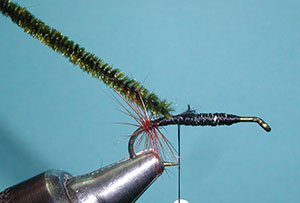
5. Wrap the chennille forward with tight wraps to about one eye length behind the eye. Trim the tag and secure with thread wraps.
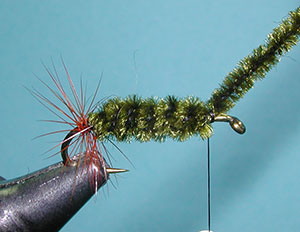
6. Select a section of mallard flank of 12-15 fibers and attach trude-style over the body by securing the mallard flank just in front of the body with the curve going downwards over the body. The wing should not extend beyond the bend of the hook.
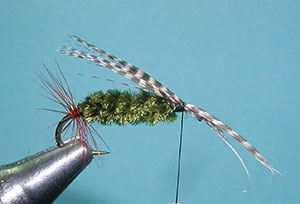
7. Clip the wing tags and wrap a threaded head.
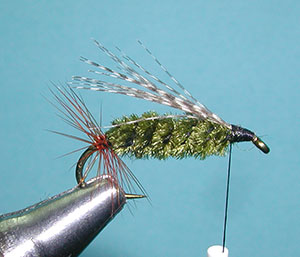
8. Whip Finish.
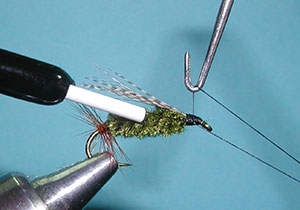
9. Add some head cement.
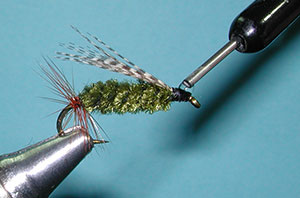
10. The finished Sheep Creek Special.
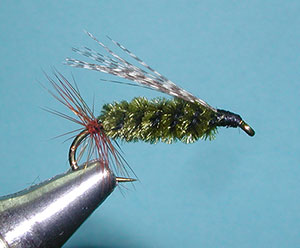
| Materials
to Order Material, click the link |
|
|---|---|
| Hook | TMC 3761 #10-14 |
| Thread | Veevus Black 10/0 |
| Head | Veevus Black 10/0 |
| Weight | 0.015 Leadfree wire |
| Body | Dark Olive Chenille, Fine |
| Rear Hackle | Brown Hackle , three turns and tied back as a collar |
| Wing | Mallard Flank, Natural |
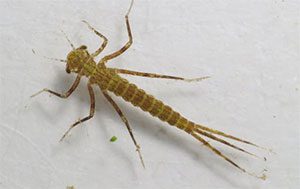
Sheep Creek Special
The Sheep Creek Special, (aka the Biggs Fly) is a popular nymph pattern for stillwaters throughout the West.George Biggsof Jerome, Idaho created the original pattern in the 1960’s for Sheep Creek Reservoir which is on the Nevada-Idaho border. It has been suggested that George actually came upon this pattern when he was fishing a Fore and Aft fly, such as the Renegade, in which the Fore hackle came apart and was dragging behind the eye. The damaged fly actually performed better and George decided to create an Aft hackle pattern with a sweeping Mallard Flank wing.
Stillwater Nymph
George was an expert in stillwater fly fishing and was known to be very outgoing in assisting other fly fishermen, his success with this pattern became contagious. In a short time, the Sheep Creek Special became special to a number of anglers in the Western states as a stillwater nymph. George passed away on Aug 2, 1997 at the age of 90 years. It may represent a Damsel Nymph pattern or some other small aquatic insect. The pattern was originally tied either weighted or unweighted with a Dark Olive chenille body on a 3X long nymph hook such as a TMC 5263 in sizes #6-16.
Medium Chenille was preferred for the larger #6-10 sizes and Fine Chenille for sizes #12-16. Often a fine gold ribbing was used on the original pattern. The body could have a number of colorations: Black & Burnt orange chenille, Black & Tan chenille, Dark olive & gold (yellow) chenille, Pheasant-tail fibers, Canadian brown mohair, and Black chenille.Additional variations came about in the 1990’s using colored floss for ribbing and a “hot spot” tag end using a 1X long nymph hook, such as a TMC 3761.
Davis Lake and Frenchman’s Reservoir
The shorter TMC 3761 hook gives the pattern a better semblance to a damsel nymph. The black coloration was particularly effective in off-color situations and the use of a “hot spot” tag seemed to pick up more attention. The Sheep Creek Special proved to be a great pattern for Davis Lake and Frenchman’s Reservoir. The late Jon Baiocchiadapted the pattern to a scud type hook such as a TMC 2457 using Krystal Chenille for the body. This created a pattern that imitated snails more effectively. This is a stillwater pattern and should be fished using a floating or intermediate line. Let it sit, particularly in skinny water. Provide some movement to the pattern at intervals.
Variations
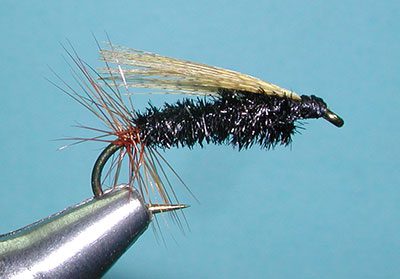
Sheep Creek Special, Black
| Hook | TMC 3761 #10-14 |
| Thread | Veevus Black 10/0 |
| Head | Veevus Black 10/0 |
| Weight | 0.015 Leadfree wire |
| Body | Black Peacock Herl |
| Rear Hackle | Brown Hackle , three turns and tied back as a collar |
| Wing | Mallard Flank, Natural |
| Ribbing | Small Silver Wire |
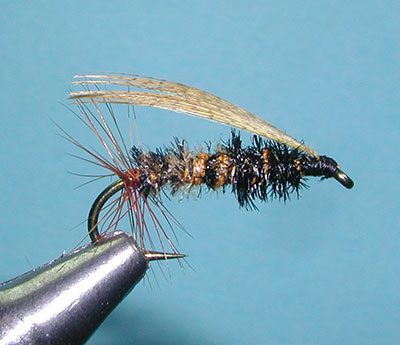
Sheep Creek Special, Black & Tan
| Hook | TMC 3761 #10-14 |
| Thread | Veevus Black 10/0 |
| Head | Veevus Black 10/0 |
| Weight | 0.015 Leadfree wire |
| Body | Black Peacock Herl and Sulphur Orange Peacock Herl |
| Rear Hackle | Brown Hackle , three turns and tied back as a collar |
| Wing | Mallard Flank, Natural |
| Ribbing | Small Silver Wire |
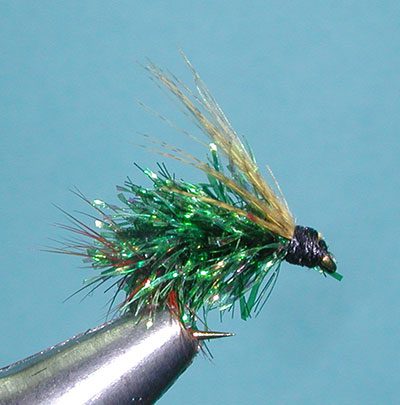
Sheep Creek Special, Krystal
| Hook | TMC 2457 #10-14 |
| Thread | Veevus Black 10/0 |
| Head | Veevus Black 10/0 |
| Body | Medium Krystalflash Chenille, Peacock |
| Rear Hackle | Brown Hackle , three turns and tied back as a collar |
| Wing | Mallard Flank, Natural |
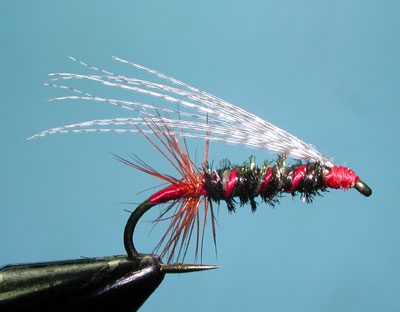
Sheep Creek Special, Red
| Hook | TMC 3761 #10-14 |
| Thread | Danville Red 6/0 |
| Head | Danville Red 6/0 |
| Weight | 0.015 Leadfree wire |
| Body | Peacock Herl |
| Rear Hackle | Brown Hackle , three turns and tied back as a collar |
| Wing | Mallard Flank, Natural |
| Ribbing | Red Floss |
| Tag | Red Floss |
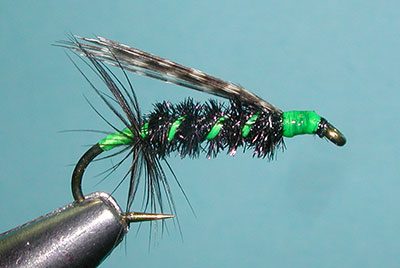
Sheep Creek Special, Chartreuse
| Hook | TMC 3761 #10-14 |
| Thread | Veevus Black 10/0 |
| Head | Danville Flat Waxed Nylon Chartreuse with Loons UV Fly Finish, Flow |
| Weight | 0.015 Leadfree wire |
| Body | Black Peacock Herl |
| Rear Hackle | Black Hen Cape Hackle , three turns and tied back as a collar |
| Wing | Mallard Flank, Natural |
| Ribbing | Danville Flat Waxed Nylon Chartreuse |
| Tag | Danville Flat Waxed Nylon Chartreuse |