
Sub-Total: $0.00
Walt’s Worm – the magic of a bottom dweller
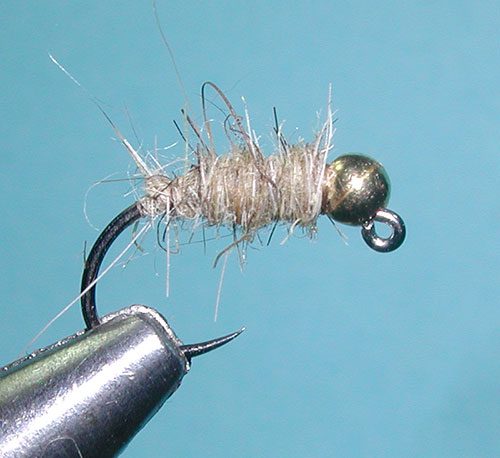
Walt’s Worm, Hares Ear Plus #1
Tying Instructions
1. Slide the slotted bead onto the jig hook. I am using a size 14 Firestick 551 with a 7/64 slotted Tungsten Bead. Wrap a leadfree wire, 0.015, about ten times around the shank and shove it into the bead cavity.
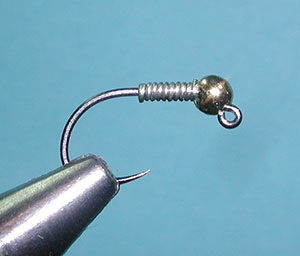
2. Attach the thread behind the lead wraps and advance the thread forward to lock in the lead wraps, then back to the bend of the hook. Apply additional thread wraps to produce a thread taper from the bend of the hook to the rear of the lead wraps.
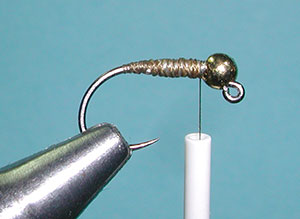
3. Apply a dubbing wax to the thread.
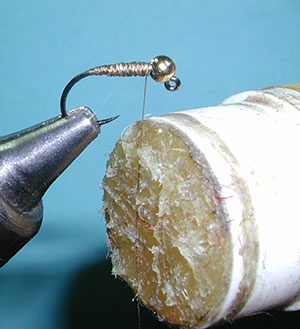
4. Apply the Hare’s Ear Plus dubbing sparingly onto the thread. Bring the dubbing up the thread to bottom of the shank and apply one turn. This will trap the dubbing hairs to the shank. With the dubbing locked into the shank, twist the dubbing around the thread in a clockwise manner to create a dubbing rope. This will tighten the dubbing around the thread.
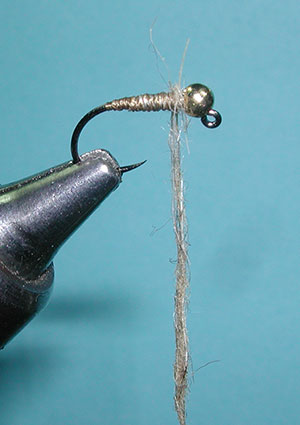
5. Then, wrap the roped dubbing around the shank with touching turns to the bend of the hook.
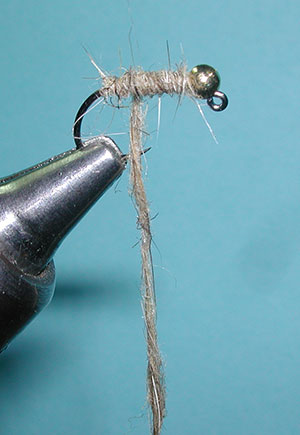
6. From the bend of the hook, wrap the dubbing rope forward building a slight taper to the beadhead. The dubbed body should not exceed the diameter of the bead.
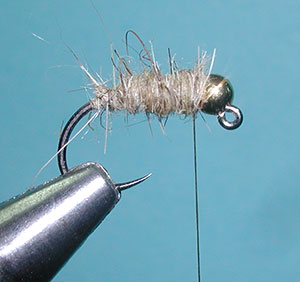
7. Whip Finish behind the bead.
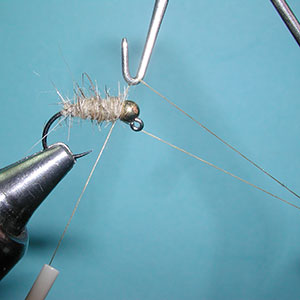
8. The finished Walt’s Worm. Use your bodkin to pick out some hairs for a shaggy look.
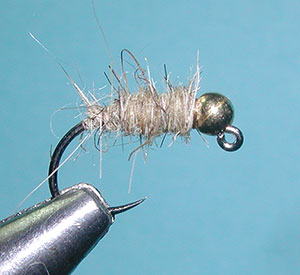
| Materials
to Order Material, click the link |
|
|---|---|
| Hook | Firehole 551 #12-16 |
| Thread | Danville 6/0 Olive |
| Head | 7/64 (2.8mm) Gold Slotted Tungsten Bead |
| Weight | 0.015 Leadfree wire |
| Body | Hareline Dubbin Hare's Ear Plus #1 |
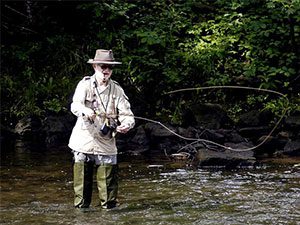
Walt Young
Walt’s Worm
The Walt’s Worm is a pattern designed by Walt Young in 1984 as he fished Spring Creek in Central Pennsylvania. Walt has been an avid fly tier and fly fisherman since the age of 12 and designed this pattern as a way to get his nymph rig down to the bottom. His pattern was simply a 2x nymph hook with 10-12 wraps of lead wire and some Hare’s ear dubbing to hide the wire. The body was cigar shaped but not tied to represent any particular insect or worm.
Many Adaptations
Walt used this pattern as his lead nymph and noted that he was out-fishing his “best” nymph, 23 to 3, with this new pattern. Soon, other locals wanted to know what Walt was using and he indicated that the fly as a “water worm” which was a term for a cranefly larvae. Soon the pattern was known as “the water worm that Walt ties” which eventually became known as Walt’s Worm. The original Walt’s Worm was tied with Hare’s Ear dubbing from Hareline. Later, Walt used the Hare’s Ear Plus dubbing since it had Antron within the mix. Loren Williams and Pat Weiss adapted the pattern towards Euro Nymphing by adding a slotted bead and a “hot spot”. The Sexy Walt’s Worm is a variation by Loren Williams adding a small holographic ribbing.
Euro Nymph favorite
Today, Walt’s Worm looks quite different from the original. It is a staple in most Euro Nymphing fly boxes with both a Tungsten slot bead and leadfree wire wraps beneath the dubbing. Hare’s Ear is still the desired dubbing but other dubbing mixes such a squirrel are used. Hot spots and tags are incorporated into the pattern for a wide range of attraction. The pattern is often a beginner’s choice since it is easily tied and very effective on the stream. For a Euro rig set-up, the pattern is usually less than 0.3 grams and is often used as the lead fly. A large selection of mottled slotted tungsten beads have become available for the euro nymphing market. Dave McKenna created a variation of the Sexy Walt’s Worm utilizing these mottled tungsten beads and incorporating a synthetic dubbed collar.
Variations
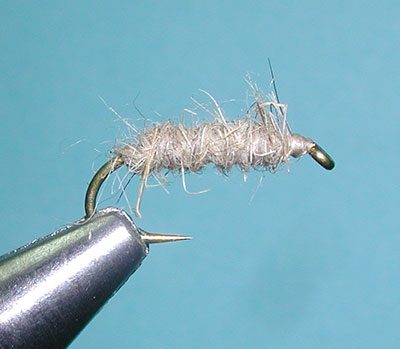
Walt’s Worm, Original
| Hook | TMC 3769 #10-16 |
| Thread | Uni-thread Tan 6/0 |
| Head | Uni-thread Tan 6/0 |
| Weight | 0.020 Leadfree wire |
| Body | Hareline Dubbin Hare's Ear Plus #1 |
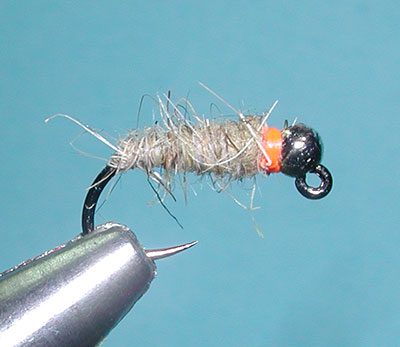
Walt’s Worm, Hot Orange Hot Spot
| Hook | Firehole 516 #10-16 |
| Thread | Veevus 10/0 White |
| Head | 3/32 (2.4mm) Silver Slotted Tungsten Bead |
| Weight | 0.020 Leadfree wire |
| Body | Hareline Dubbin Hare's Ear Plus #1 |
| Collar | Veevus 12/0 Fluorescent Orange |
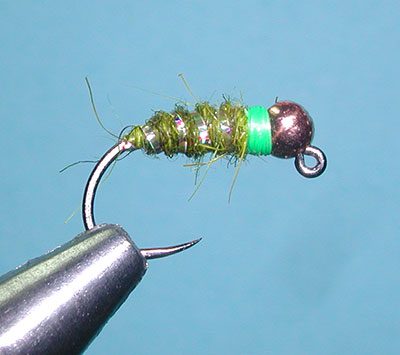
Sexy Walt’s Worm, Olive
| Hook | Firehole 551 #12-18 |
| Thread | Veevus 10/0 Olive |
| Head | 7/64 (2.8mm) Copper Slotted Tungsten Bead |
| Weight | 0.020 Leadfree wire |
| Body | Hareline Dubbin Hare's Ear Plus Olive #6 |
| Collar | Veevus 12/0 Fl. Green |
| Ribbing | Small Veevus Holographic Tinsel, Gold |
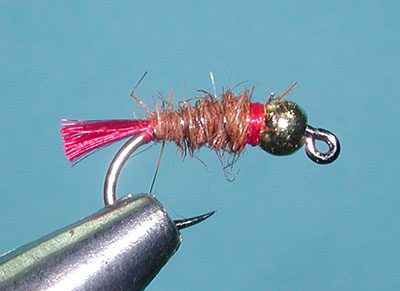
Walt’s Worm Blow Torch
| Hook | Firehole 516 #12-18 |
| Thread | Veevus 10/0 Red |
| Head | 7/64 (2.8mm) Gold Slotted Tungsten Bead |
| Weight | 0.020 Leadfree wire |
| Body | Hareline Dubbin Hare's Ear Plus Tan |
| Collar | Veevus 10/0 Red |
| Tail | Danville Floss Red |
| Ribbing | Small Silver Wire |
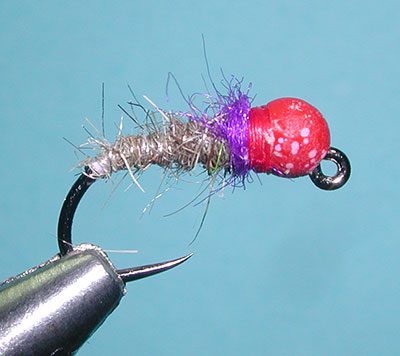
Sexy Walt’s Worm, McKenna
| Hook | Firehole 516 #10-16 |
| Thread | Veevus 10/0 white |
| Head | 1/8 Mottled Red Slotted Tungsten |
| Weight | 0.020 Leadfree wire , 5-6 wraps |
| Body | Hareline Dubbin Hare's Ear Plus Dark |
| Collar | Senyo Laser Hair dubbing, Purple |
| Ribbing | Small Silver wire |