
Sub-Total: $0.00
RS2 – a simple and minimalist approach
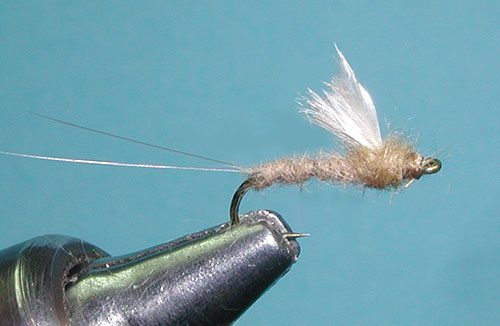
RS2 Callibaetis
Tying Instructions
1. Attach the hook to the vise and build a thread base from midway on the shank to the position where the tail fibers will be attached on the hook.
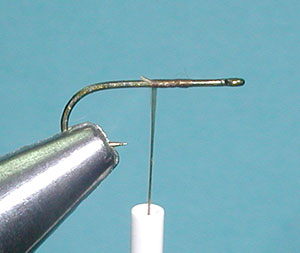
2. Attach two microfibbets for a tail. The tail length should be about the same as the shank. Place the microfibbets near the top of the shank against the side of the shank facing you. Place two thread wraps around the material to secure. The tension of the thread wraps will bring the material to the top of the shank.
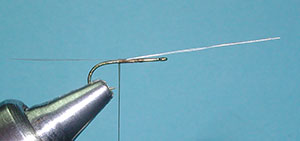
3. Secure the microfibbets with thread wraps to the top of the shank ending at the bend of the hook.
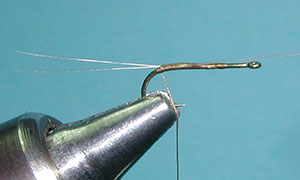
4. Apply two wraps of thread under the tailing material, then split the microfibbets by taking a wrap between the fibers and over the top of the hook shank.
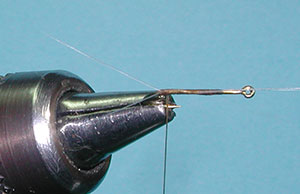
5. Two more tight wraps over the thread will secure it.
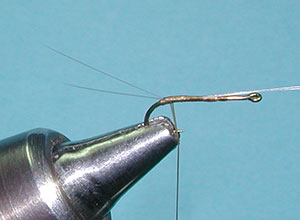
6. Apply some thin Fly Finish to the base of the microfibett tail. This provides durability and strength to the separation of the tail fibers.
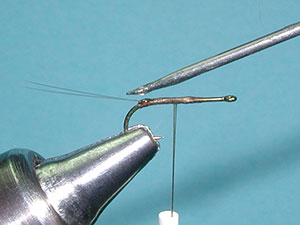
7. Use a UV Lamp to cure the finish.
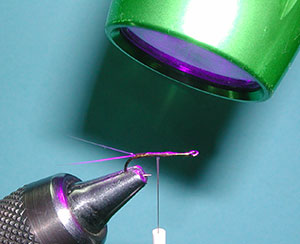
8. Normally, the long strands of beaver dubbing will create a nice rope on a single thread. Since much of our beaver dubbing is processed with smaller fibers, you might find improvement using a dubbing loop. Creat a dubbing loop at the base of the tail.
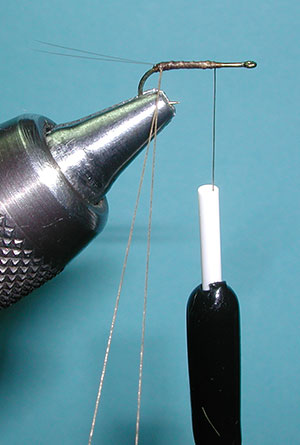
9. Apply a sparse amount of dubbing to the loop. The spinner tool will close the loop and twist the thread into a chenille.
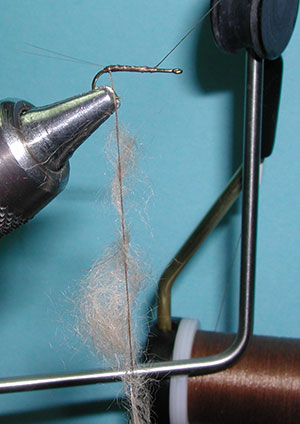
10. Spin the tool clockwise so that the material forms a noodle.
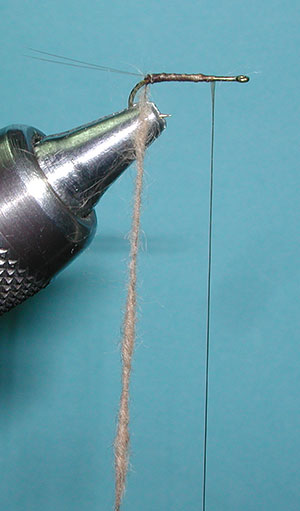
11. Apply one wrap of the noodle over the shank to lock in the fibers. Now, further spin to form a tighter noodle. The more twisting you do, the tighter the noodle and you will be able to wrap a better segmented body.

12. Wrap the dubbing forward for a tapered body to the 3/4 position. Try not to overlap so that each wrap represents a segment to the abdomen.
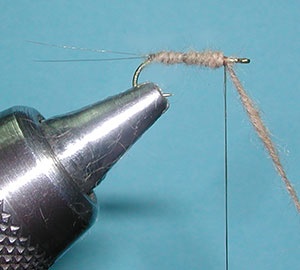
13. Clip the webbing material from the base of a Dun Saddle Hackle. This is the soft marabou material.
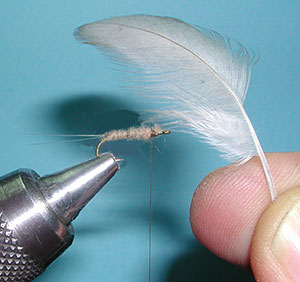
14. Attach the clump with the trimmed stems facing over the eye with 2 tight thread wraps. Clip off the material over the eye and secure wirht 4-5 additional wraps.
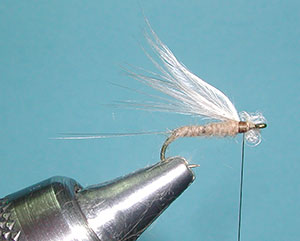
15. Apply some more dubbing to the thread and create a tight noodle by twisting the material clockwise around the thread.
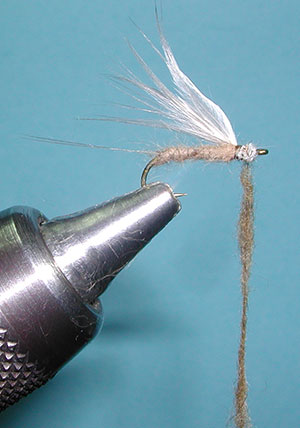
16. Wrap the dubbing around both sides of the wing material.
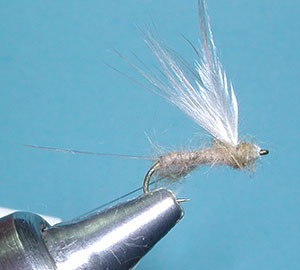
17. Finish with some thread wraps behind the eye and a whip finish.
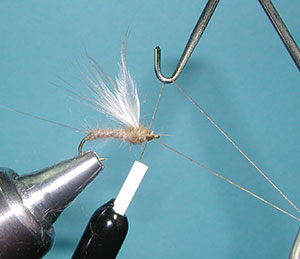
18. Place your scissors at an upward slant and trim the wing so that it doesn’t exceed the diameter of the thorax.
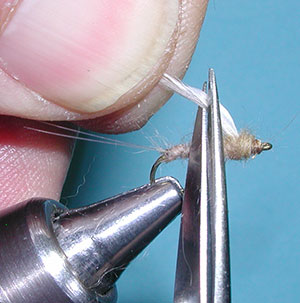
19. The Finished RS2 (Callibaetis on a size 16).
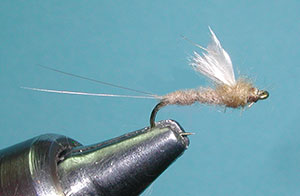
| Materials
to Order Material, click the link |
|
|---|---|
| Hook | TMC 101 #14-18 |
| Thread | Veevus 12/0 Brown |
| Body | Tan Beaver Dubbing |
| Thorax | Callibaetis Beaver Dubbing |
| Tail | Med. Dun Microfibbets |
| Wing | Medium Dun Saddle Hackle, trimmed |
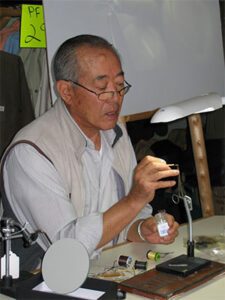
Rim Chung
RS2
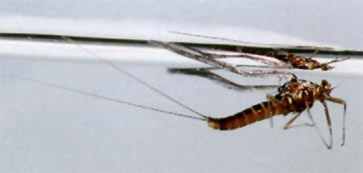
Designed by Rim Chung. RS2 stands for Rim’s Semblance #2. It was designed originally for baetis and midges on the South Platte in the mid 1970’s. The body of the fly hangs down into the surface file and the wing looks like an emerging midge. By trimming off the tails, a better midge pattern emerges… no pun intended.
Diverse Colorations
The RS2 is tied in many different colors: Pale Yellow, Olive, Black, and Gray being the most popular. The Body Material can vary from the Beaver Dubbing that Rim originally chose, to Haretron, Superfine, and Quill Biots. Rim Chung always ties the tail with Dun Microfibetts but Moose Hair is sometimes substituted. The wing material also varies…
CDC (Cul de Canard feathers)
Rim used the dark dun webbing from the base of Dun Saddle Hackles. Many others prefer to use CDC, Antron, Hi Vis, or foam. The wing is usually trimmed at an upward slant where the length of the wing is about the same as the thorax. When CDC is used, the pattern is often referred to as a CDC Dun. If Antron or Z-lon fibers are substituted for the tailing material, the pattern is often designated as an emerger, ieCDC Emerger. What makes the RS2 unique is not the materials used but the way they are tied forming a simple pattern that can be modified to many types of hatches, particularly with Baetis.
Rope Dubbing
The pattern is marketed by fly merchants but often without the attributes the Rim displays with those patterns that he ties. Rim was one of the first tiers to construct contrasting colorations to the body and thorax. His technique of dubbing the thread to create a rope effect allowing a thin segmentation to the body. Commercially available Beaver Dubbing has become shorter in fiber lengths through blending processes and dyeing. Rim requires the fibers to be at least 1/2 inch in length to create the rope effect with hand twisting. Today, with the shorter fibers, you may need to use a dubbing spinner tool to get the same effect.
“The essence of zen is the beauty of simple things. Fly or Nymph Fishermen tend to fall into one of the above three categories. I am a semblance minimalist fly fisher and only carry 5 or 6 different patterns. I used to carry around 3000 patterns, I was an exact imitationalist, as I was a commercial tyer in my youth. But nowadays it’s just Rim Chung’s RS2, the Improved Yong Special, the YKnot, the Calgon Fly, Andy Kim’s micro egg and a pheasant tail variant. If I found my former methodology more effective, I’d return to it. But minimalism suits me, and the fish as well.” Rim Chung April 20th, 2020
Variations
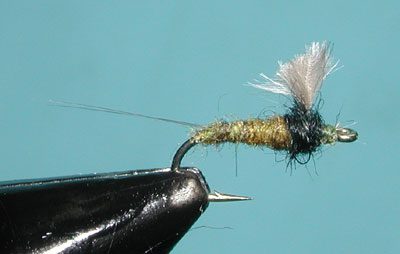
RS2 BWO
| Hook | TMC 101 #18-22 |
| Thread | Uni-thread Olive 8/0 |
| Body | Olive Beaver Dubbing |
| Thorax | Black Beaver Dubbing |
| Tail | Med Dun Microfibbets |
| Wing | Dun Saddle Hackle, trimmed |
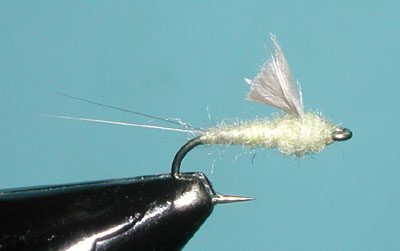
RS2 PMD
| Hook | TMC 101 #16-20 |
| Thread | Danville Cream 6/0 |
| Body | Pale Yellow Superfine |
| Thorax | Pale Yellow Superfine |
| Tail | Med Dun Microfibbets |
| Wing | Dun Saddle Hackle, trimmed |
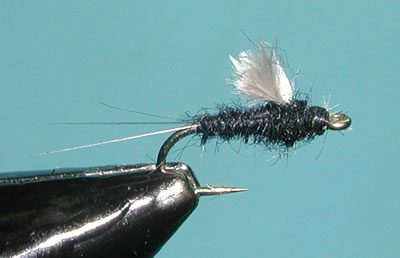
RS2 Trico
| Hook | TMC 101 #20-24 |
| Thread | Uni-thread Black 8/0 |
| Body | Black Beaver Dubbing |
| Thorax | Black Beaver Dubbing |
| Tail | Med Dun Microfibbets |
| Wing | Dun Saddle Hackle, trimmed |
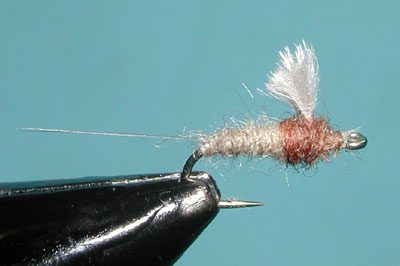
RS2 March Brown
| Hook | TMC 101 #16-18 |
| Thread | Uni-thread Brown 8/0 |
| Body | Cream Beaver Dubbing |
| Thorax | Brown Superfine |
| Tail | Medium Dun Microfibbets |
| Wing | Dun Saddle Hackle, trimmed |
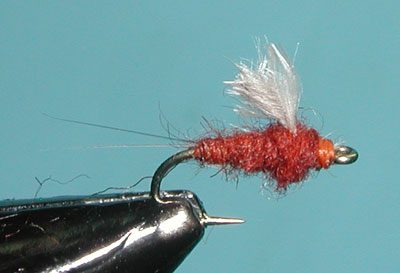
RS2 Hendrickson
| Hook | TMC 101 #16-18 |
| Thread | Uni-thread Rusty Brown 8/0 |
| Body | Rusty Spinner Beaver Dubbing |
| Thorax | Rusty Spinner Beaver Dubbing |
| Tail | Med Dun Microfibbets |
| Wing | Dun Saddle Hackle, trimmed |
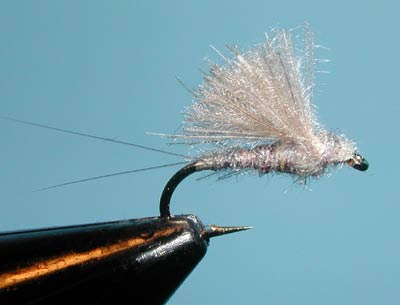
CDC Dun Callibaetis
| Hook | TMC 100 #16-22 |
| Thread | Uni-thread Gray 8/0 |
| Body | Adams Gray Superfine |
| Thorax | Adams Gray Superfine |
| Tail | Med Dun Microfibbets |
| Wing | Dun CDC |
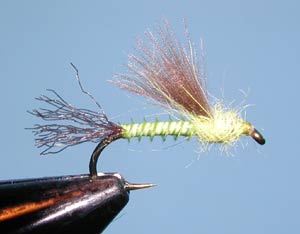
CDC Emerger PMD
| Hook | TMC 100 #16-18 |
| Thread | Danville Cream 6/0 |
| Body | Yellow Tan Turkey Biot |
| Thorax | PMD Superfine |
| Shuck | Olive Antron Fibers |
| Wing | Med. Dun CDC |
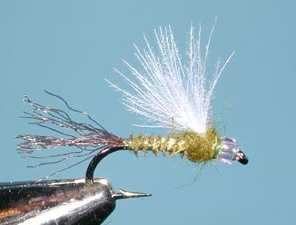
CDC Emerger BWO w/Glass Bead
| Hook | TMC 100 #16-18 |
| Thread | Uni-thread Olive 8/0 |
| Head | Clear Glass Bead |
| Body | Olive Turkey Biot |
| Thorax | BWO Superfine |
| Shuck | Olive Antron Fibers |
| Wing | White CDC |