
Sub-Total: $0.00
Balanced Leech – an effective way to achieve balance
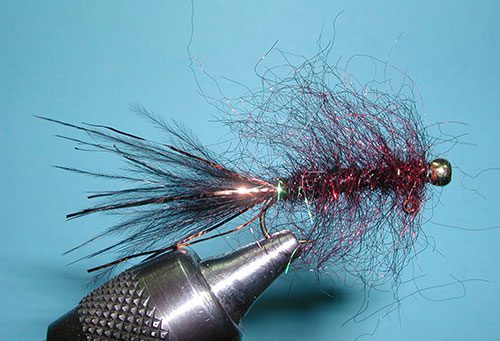
Balanced Leech, Blood Leech
Tying Instructions
1. Slip a bead onto the pin with the larger hole facing the head of the pin. I’m using a 1/8″ bead.
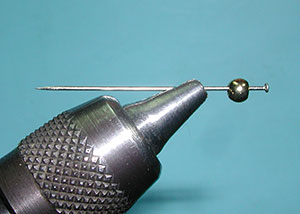
2. Bring the bead to the end of the pin, notice how the head of the pin is within the bead. Secure with thread wraps. Apply a whip finish and trim off the thread.
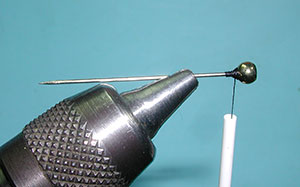
3. Secure the pin to the top of the hook shank with 6-8 thread wraps and whip finish to trim off the thread.
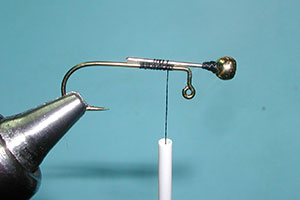
4. Place the eye of the hook through another pin to check how level it is. Note that the hook has a 30 degree tilt. This is too much. We want the hook to be almost level but not quite since dubbing and a tail will be added.
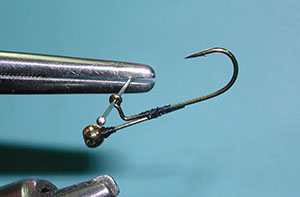
5. Push the bead closer to the eye of the hook and check once again for level. We want a 15 degree tilt and this is what we have after adjusting the pin further along the hook shank.
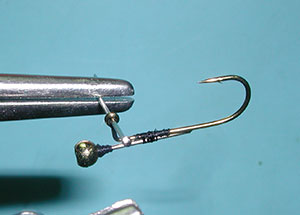
6. Place the hook back on the vise and lash the pin firmly to the hook shank with additional wraps.
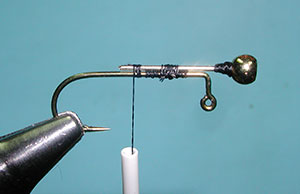
7. Once the pin has been firmly attached, apply some zap-a-gap to the thread wraps to assure a firm set. Note the distance of the bead from the hook eye. This will give you a distance that you can easily duplicate with other flies using the same materials.
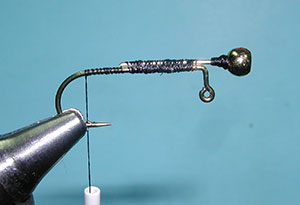
8. Clip a section of fibrules from the quill of a marabou plume. Hold these fibrules securely with you fingers so that the tips remain fairly even.
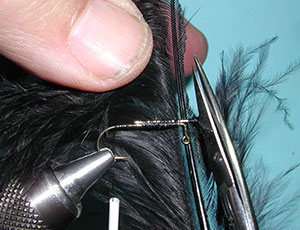
9. Holding the tips above the hook shank measure the length of the marabou so that the tail length is about the same as the hook shank length.
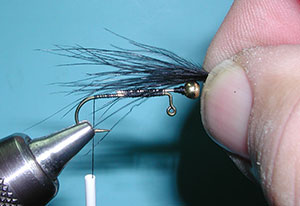
10. Secure the marabou tips at the tail tie-in position with 2 wraps and then spirol wrap forward trapping the tag end pieces to the top of the hook shank.
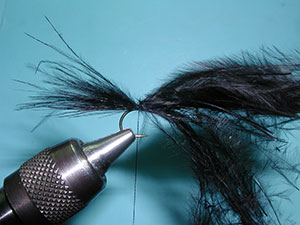
11. Trim off the tag ends of the marabou and attach some Krystal Flash or flashabou to both side of the tail at the tail tie-in position. The flash should not extend beyond the tail fibers.
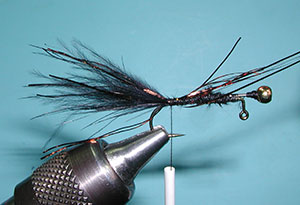
12. Secure the tag ends of the flash with thread wraps and trim off the excess behind the eye of the hook. Wrap the thread back to the tail tie-in position.
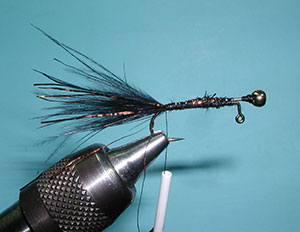
13. Create a dubbing loop. This is a large loop of thread that is held in an open position with the use of a dubbing tool. You wrap the top of the loop with some thread wraps to close the apex of the loop and bring the thread around the top of the loop to close it, then wrap your thread forward to the eye of the hook.
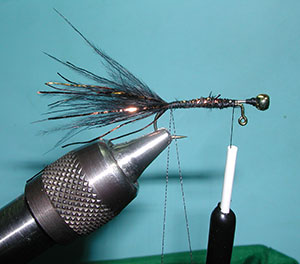
14. Position the dubbing fibers within the loop teasing them within the loop for the proper density. If you desire a tapered body, you would have a smaller density of fibers near the tail tie-in position and more fibers closer to the bead.
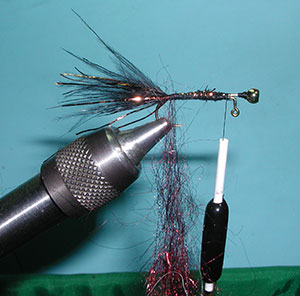
15. Trap the fibers within the loop by twisting the dubbing tool. As it twists the two threads, you can massage the material and reposition the dubbing. Use a velcro dubbing tool to help pull out the fibers.
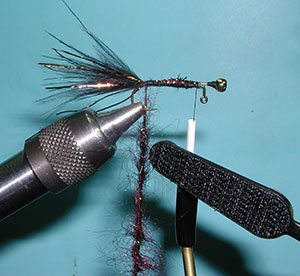
16. The loop can be secured with a hackle plier and the dubbing tool can be removed prior to wrapping the material around the shank. Use a dubbing brush to help distribute the fibers.
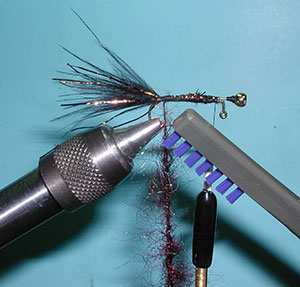
17. Wrap the dubbing rope of fibers forward with touching wraps. Once you get to the eye of the hook, dub a couple of wraps in front of the eye, just behind the bead. If you don’t have enough dubbing rope, don’t worry…just make another dubbing loop to create enough dubbing rope to finish the job.
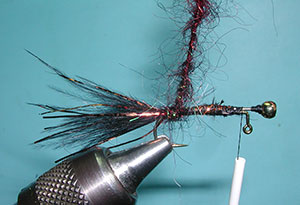
18. Secure the dubbed rope with a whip finish behind the bead and trim off the thread.
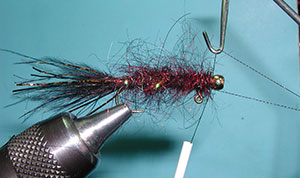
19. Use a velcro dubbing brush to tease the fibers from the dubbing loop. Work all around the shank. Particularly, tease the fibers from just behind the conehead for a full flowing body.
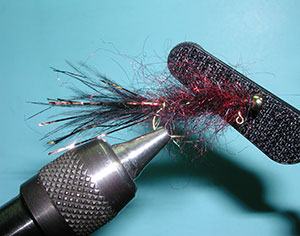
20. Not enough fibers have been pulled from just behind the bead. Use the velcro brush to pull the fibers forward toward the bead, then brush back.
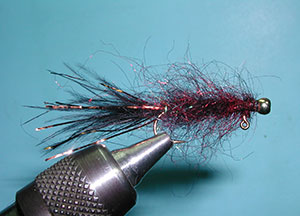
21. Check the fly to see that it lays level. Looks good. Note how the fibers behind the bead are now longer with some additional teasing.
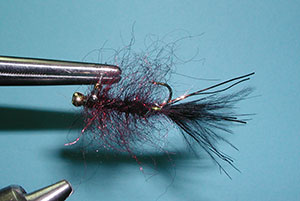
22. The finished Balanced Leech.
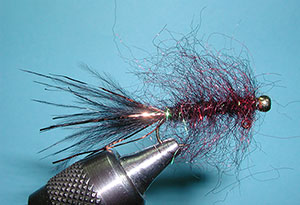
| Materials
to Order Material, click the link |
|
|---|---|
| Hook | Daiichi 4660 size 6-8 |
| Thread | Uni-thread 6/0, Black |
| Extension | Balanced Fly Pin |
| Head | 1/8 Tungsten Gold Bead |
| Body | Arizona Simi Seal, Blood Leech |
| Tail | Black Marabou with Speckled Copper Flashabou |
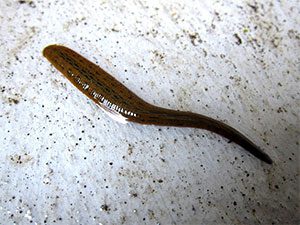
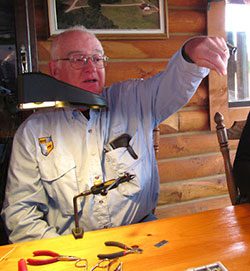
Jerry McBride
Balanced Leech
The Balanced Leech came from the efforts of Jerry McBride of Spokane, Washington around 2005. Jerry looked for a way to suspend the hook in a horizontal position and was inspired by a discussion of lashing beadheads to hooks with pins in Leeson and Schollmeyer’s Fly Tier’s Benchside Reference (page 431).
Balanced Pin
The Benchside discussion had bent the pin so that the bead was positioned above the shank and would turn the hook upside-down. Jerry kept the pin straight and extended beyond the eye of the hook so that the hook would not only ride upside down but also be balanced within a horizontal position. Pins worked great on small beadheads and hooks smaller than size 10. Larger patterns, particularly those using coneheads, require a larger and heavier brad to suit the purpose. Jerry applied the “Balanced” concept to a number of stillwater beadhead patterns.
Variations with Mohair Leech
Phil Rowley was instrumental in bringing popularity of the pattern to many anglers with his series of Balanced Leeches on You Tube. The Mohair Leech pattern using Arizona Simi Seal became quite popular around 2005 with the many different colorations that John Rohmer developed. The materials have such a strong following that the pattern developed it’s own name, the Simi Seal Leech. In addition, jig style hooks with either a 60 degree or 90 degree eye were starting to be utilized within the fly fishing community.
Together, these hooks and materials work well to provide a larger Balanced Leech in sizes 4-10 for trophy lakes such as Crowley, Davis, and Pyramid. Sparkle Chenille, Angora Goat, along with some flash material such as Wing N’ Flash will also provide excellent bodies for the Balanced Leech. One popular pattern at Lake Pyramid is the Midnight Cowboy. Often you will find this tied with a Sparkle Chenille (Midnight Fire) having bits of Blue and Red mylar within the chenille. However, the pattern can also be tied with Black/Blue and Black/Red Simi Seal.
Variations
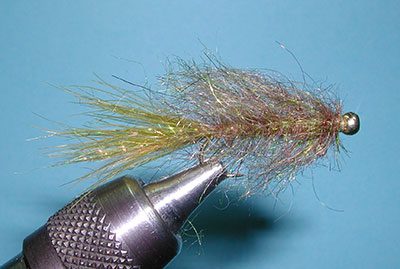
Balanced Leech, Bronze Peacock
| Hook | Daiichi 4660 size 6-8 |
| Thread | Uni-thread 6/0, Olive |
| Extension | Balanced Fly Pin |
| Head | 1/8 Tungsten Gold Bead |
| Body | Arizona Simi Seal, Bronze Peacock |
| Tail | Dark Olive Marabou and Brown Olive Marabou with Olive Krystalflash |
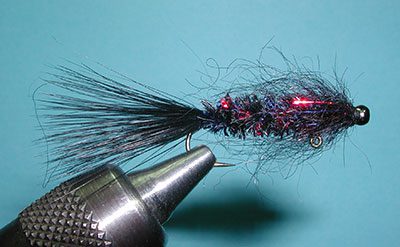
Balanced Leech, Midnight Cowboy
| Hook | Daiichi 4660 size 6-8 |
| Thread | Uni-thread 6/0, Black |
| Extension | Balanced Fly Pin |
| Head | 7/64 Tungsten Black Bead |
| Body | Midnight Fire Speckled Chenille |
| Tail | Black Blood Marabou |
| Collar | Arizona Simi Seal, Black/Blue and Arizona Simi Seal Black/Red |
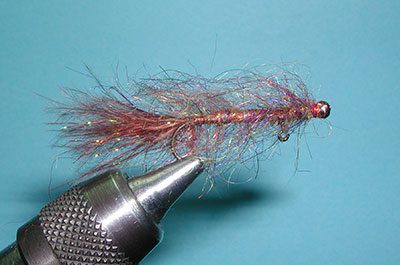
Balanced Leech, Canadian Brown
| Hook | Daiichi 4660 size 6-8 |
| Thread | Uni-thread 6/0, Rusty Brown |
| Extension | Balanced Fly Pin |
| Head | 7/64 Copper Tungsten Bead |
| Body | Arizona Simi Seal, Canadian Brown |
| Tail | Brown Marabou with Root Beer Krystalflash |
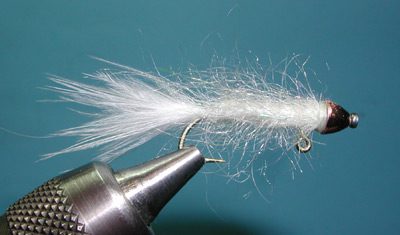
Balanced Leech, White Ghost
| Hook | Daiichi 4660 size 6-8 |
| Thread | Uni-thread 6/0, White |
| Extension | Balanced Fly Pin |
| Head | Copper Conehead |
| Body | Arizona Simi Seal, Starlight |
| Tail | White Marabou |
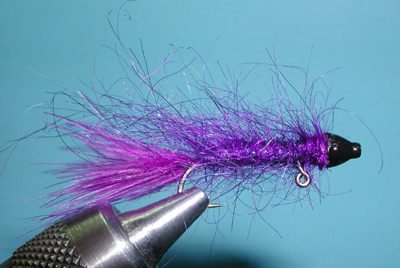
Balanced Leech, Purple
| Hook | Daiichi 4660 size 6-8 |
| Thread | Uni-thread 6/0, Black |
| Extension | Balanced Fly Pin |
| Head | Black Conehead |
| Body | Purple Angora Goat Dubbing with Dark Blue Wing N' Flash |
| Tail | Purple Marabou |
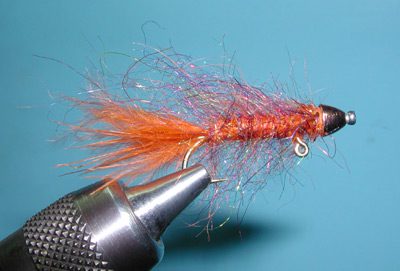
Balanced Leech, Canadian Orange
| Hook | Daiichi 4660 size 6-8 |
| Thread | Uni-thread 6/0, Rusty Brown |
| Extension | Balanced Fly Pin |
| Head | Gold Conehead |
| Body | Arizona Simi Seal, Canadian Orange |
| Tail | Crawdad Orange Marabou |