Notes: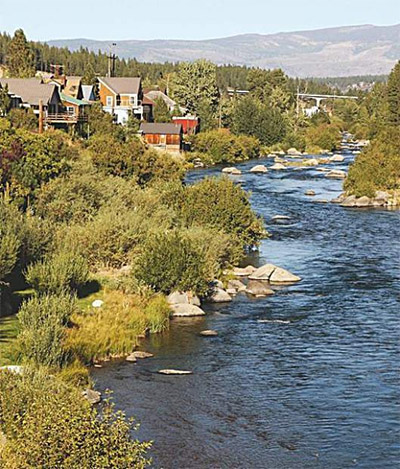
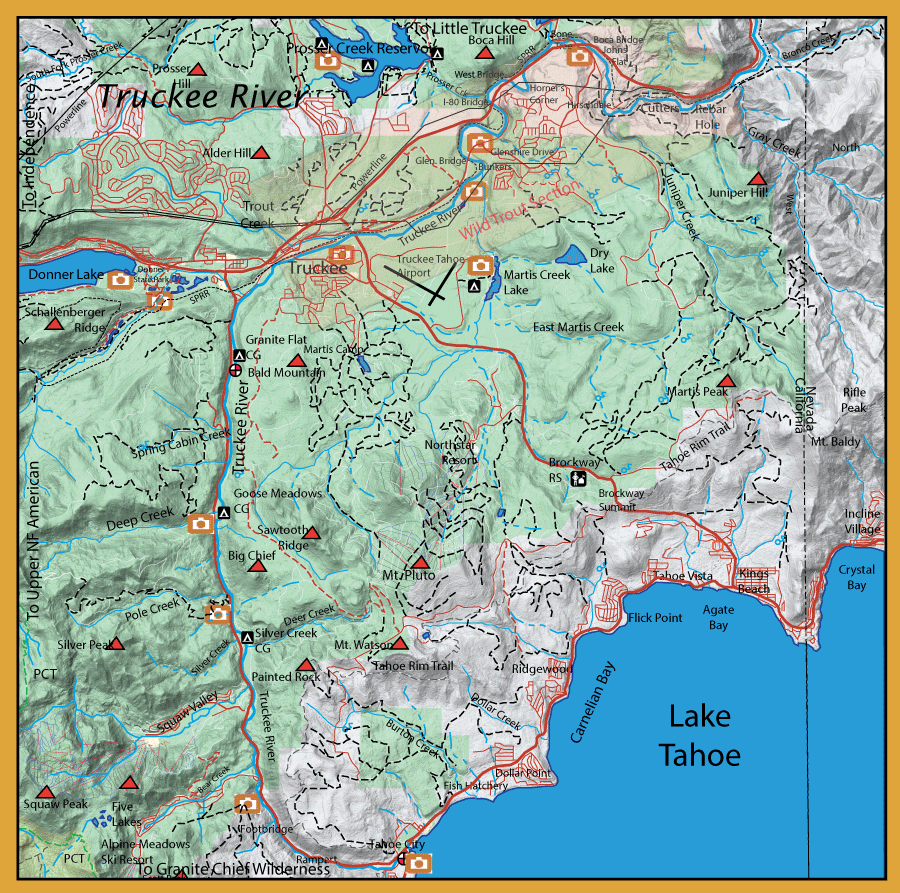
The Truckee River is the only outlet for Lake Tahoe. In 1844, Chief Truckee guided an emigrant party from the Humboldt River to California via the Truckee River, Donner Lake, and Donner Pass. In appreciation of the chief’s guidance, the party named the river after him. It leaves Lake Tahoe near Tahoe City and continues along Hwy 89 to the town of Truckee. From there it follows I-80 northward towards Reno. The fly fishing portions of this river mainly occur between the turnoff to Alpine Meadows and where Gray Creek merges into the Truckee, 10 miles downstream from the Boca Bridge. There is no fishing allowed from the Tahoe City’s “Fanny Bridge” downstream for 1000 feet. The average trout size is 9-12 inches. There are slightly more Browns present than Rainbows. The Browns can get up to 18-22″ and the Rainbows to 16-20 inches. Recently, Lahontan Cutthroats, which originally inhabited the river, have been reintroduced. Your basic rod choice is a 9-foot 5 weight, moving up to a 6 weight during windy conditions. Leaders should be 9 foot 3x with a 3x-6x tippet. Within California, the Truckee is open all year. The general regulations are in effect from 1000′ below the outlet dam of Lake Tahoe to the confluence of Trout Creek. High Stick Nymphing with or without an indicator is the preferred method to fish this stream. The best water temps are 56-68 degrees.
The Truckee has an insect distribution of about 65% caddis, 20% mayfly and the rest mixed. Hatches start to turn on in May, usually with a Baetis hatch. The hatches tend to peak just before dark using size #18 -20 BWO Quigley Cripple or a BWO Parachute Dun. Nymphing in the afternoon with a BH Pheasant Tail or a Poxyback Baetis can be a good choice as well. The caddis show up starting in June and try a Olive X-Caddis or Olive Elk Hair Caddis (14-18) for the caddis as well as Blue Wing Olives and Pale Morning Duns for the mayflies. Spring often starts with a hatch of Skwala Stoneflies in April and May. A size 8 Stimulator works well for a dry fly and a dark stonefly nymph for subsurface. A Green Drake Hatch (size #8-10) is also possible during mid-June as well as Golden Stones (size #4-6). #10 Winged Black Carpenter Ants are another good offer during June. The Little Yellow Stonefly hatch occurs in June and early July, try skating a Yellow Stimulator or Clark’s Little Yellow Stonefly. Pale Morning Duns hatch in early July. A Burk’s Hunchback Infrequens can be used for the nymph and a PMD Sparkle Dun for the adult. During June, July, and August, there are hatches of Green Rock Worm and Spotted Caddis. With the Caddis hatch, try an Emergent Sparkle Pupa or Caddis Emerger. Finally in late September to early November, the October Caddis (size #6-8) is around and the last hatches of the blue-wing olives will occur. BWO’s (size #18-24) usually show up around mid-day for a couple of hours. A BWO Quigley Cripple works well, also try Pheasant Tail Nymphs before and after the hatch. Throughout the season nymphs are used such as Prince Nymphs, Zug Bugs, Bird’s Nest, and Pheasant Tail Nymphs are favorites.
Upper Section of Truckee: Along Highway 89, there is a 10 mile stretch of water between Alpine Meadow Rd. and Donner Creek. The river is mostly stocked rainbows with a few small browns. This section has a five-trout limit and no gear restrictions from the last Saturday of April to November 15th., the rest of the year it is 0 trout and can be fished only with barbless hooks. It is mostly riffle type water with river rafters present during high water periods. Pocket water begins at the confluence of Bear Creek and extends for a mile to the Squaw Valley turn-off. After that, it is back to riffles and runs to Donner Creek.The area has numerous access points and campgrounds available. The “Footbridge” below Squaw Creek has ample parking just south of the stop light with access to pocket water. “Rocky Wash Riffle” also has ample parking with riffle water flowing into deeper pools. The three campgrounds along this stretch will have parking and access. Nymphs are popular through holding spots although some hatches provide good dry fly action with Baetis and March Brown hatches occuring in Spring and Golden Stone and a Green Drake hatch in late-Spring (mid-June) .
Wild Trout Section of Truckee: At the eastern edge of the town of Truckee where Trout Creek enters the Truckee, the Truckee River begins a “Wild Trout” section with restrictions of barbless flies and a 0 trout bag limit. Fishing is open year round. Most of this section is accessed by Glenshire Drive which parallels the river for 4 miles. The water is mainly riffles and runs with open areas for casting and easy wading. Just downstream from the Glenshire bridge is a private reserve owned by San Francisco Flycasters. This private water extends to the first bridge at I-80 at Prosser Creek. After the second I-80 bridge, there are deep pools, one known as “Horner’s Corner” for Jack Horner, inventor of the Humpy fly. The “Wild Trout” section was extended from the confluence of Gray Creek to the Nevada state line in 2014. The best time to fish this area is after the Spring run-off has passed and the water starts to clear to the end of June prior to the hot July weather. Due to the large number of emerging caddis, a wet-fly swing of a Grey Hackle works as well as nymph patterns such as Bird’s Nest and Prince Nymphs. The prime lies are the pocket water and heads of pools. Within this section about 20% of the water contains 80% of the fish.
Lower Section of Truckee: From the Boca Bridge to Gray Creek, about 10 miles, there are deep pools for streamer action. This area has large rainbows and smallmouth bass. It also has a 0 trout limit, open year round, and can be fished only with artificial lures with barbless hooks. The flows are somewhat greater due to released water from Stampede and Boca Reservoirs. Fishing this area during the Fall is much easier when water levels are lower. Fishing is best before 9:00am and after 3:00pm when the canyon is shaded. You can get access at Boca Bridge but most of this area is private and access is difficult. There is a railroad line for 7 miles to Floriston that you can follow alongside the river. The flow gauge is at Boca Bridge, typically at 250 to 740 cfs. The best fishing flows are 300 to 500 cfs. Check the link above for Current conditions.
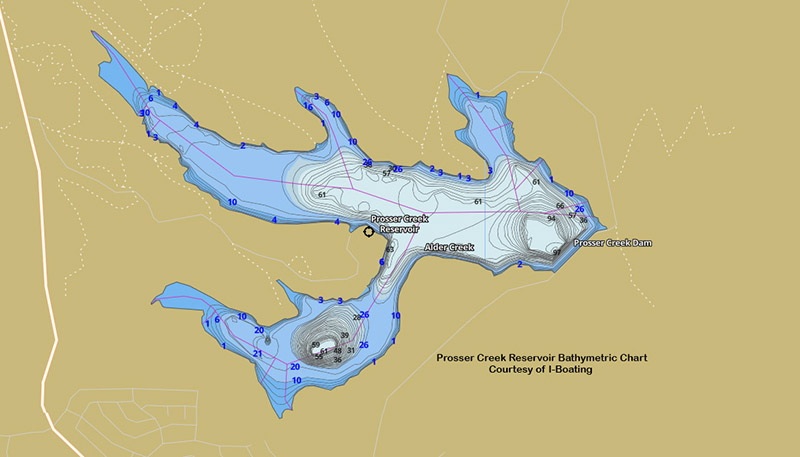
Prosser Creek Reservoir: Contains a large Brown trout population and is planted with Rainbows. The lake is open year round with ice fishing popular during the winter. It can be fished from a float tube working along the banks and near the Dam. This reservoir is particularly good during ice-out in mid-March to mid-April. The trout that were trapped under the ice flow feed ravenously. Small Buggers with nymph droppers are very effective using a sinking line and a slow retrieve. Good fishing areas are the points on both sides of the dam. If the lake is full, good hatches come off at the mouth of Alder Creek during July. The Fall months can also be good when low water conditions exist causing the fish to become concentrated.
Martis Creek Lake: This 70 acre lake is one of the more famous fly-fishing lakes in the Sierra that is ideal for float tubes. It was the first lake in the State to be named a “Wild Trout” lake with strict restrictions to barbless flies and catch & release. Originally, the restrictions were to enhance the Lahonton Cutthroats that were stocked in the lake but they were soon outcompeted by large Browns and Eagle Lake Rainbows. Martis Lake was a trophy Brown Trout destination in the mid-80’s. However, in the early 90’s, a prolonged drought devastated the fishery and most of the Browns were lost. On Dec. 2014, Martis Creek Reservoir lost it’s “Wild Trout” designation to allow a put-and-take management of the fishery since it is close to the town of Truckee. Today, Martis Lake is rebuilding itself with Rainbows and Browns. There is also a strong population of dace, suckers, and carp. You can fish the lake with Bugger patterns in the early season and use blood midge patterns with 6x to 7x leaders after the water warms up in June. Most Chironomid Pupa patterns, such as Zebras and Optimidges, work well. Local Guide Ralph Cutter designed a Blood Midge emerger, Martis Midge, to fish the midge hatch near the surface. June and July have a damselfly hatch along with callibaetis hatches. For the Callibaetis, use a Pheasant Tail Nymph above the weedbeds and a Callibaetis Cripple for the emerger. The Damsels usually peak around the Fourth of July. Algea blooms are becoming an increasing problem during the late summer months of August and September due to development that has occurred within it’s feeder streams, ie Golf Courses. The Fall period of Mid-September to Mid-October is another good period as the fish become quite active once the weather starts to cool. Olive Woolly Bugger patterns work well imitating small Sunfish, a food source for trout near the weebeds. The tributaries that feed Martis Lake are catch & release only with barbless hooks.
Local guide, Frank Pisciotta, has the following tips for fishing Martis Creek Lake: 1) Use basic tactics such as fishing drop-offs, springs, weed beds and wind lines, 2) Use sub-surface flies such as nymphs, larvae, and baitfish imitations, 3) Wind can be a problem so fish the sheltered coves, 4) With windy conditions, use a fast-sinking line with a streamer pattern, 5) The south side of the lake at the inlet of Martis Creek is a hot spot as well as the open channel over the old streambed, 6) Long casts with slow retrieves, 7) Use thin tippets, 8) During Damselfly migration, cast towards shore and retrieve using an intermediate line.
In early season, try the long spit, near the Sierra View Campground and Martis Creek inlet. The creek inlet is also good throughout the summer due to the cool water flow. Cool water springs also exist along the eastern shore. The blood midges that hatch throughout the season were actually introduced to breakdown sludge at a nearby sewer treatment plant and the blood midges have now migrated throughout many of the Eastern Sierra lakes with mud bottoms. Try a Blood Midge Pupa in a palomino and buzzer style. But also try larva, emerger, and adult patterns of chironomids as well. Most use a size 14-18 but some have even been successful with larger sizes of #10-12. Other productive hatches are the callibaetis hatch using Mosquito, Parachute Adams or Comparadun (#14-18).
Baitfish are a key food source in Martis Creek Lake as well. Baitfish include Lahonton fry, Dace, and Sunfish. Olive, Brown, and Black Leech and Bugger patterns (size 6 to 8) work well. Local Guide Andy Burk prefers a yellow “Stanley Streamer” for the sunfish imitations. Generally, the larger browns will hit the streamers on a fast retrieve just off the bottom. An excellent Access Map is available at Mountain Hardware (Ace) in Truckee which will provide numerous access points for the Truckee within California and Nevada.
|
| Fishing RegulationsTruckee River from 1000 feet below outlet dam at Lake Tahoe to confluence with Trout Creek: From the last Saturday in April through November 15, 5 trout daily bag limit, 10 trout in possession; and, from November 16 through the Friday preceding the last Saturday in April, 0 trout bag limit, artificial lures with barbless hooks only and trout must be released unharmed and not removed from the water. Truckee River from the confluence of Trout Creek downstream to the mouth of Prosser Creek: Open all year. Artificial Lures with barbless flies. 0 trout. Truckee River from the mouth of Prosser Creek downstream to the Nevada State Line: Last Saturday in Apr. through Nov. 15. Only artificial lures may be used. 2 trout.
Nov. 16 through the Friday preceding the last Saturday in Apr. Only artificial lures with barbless hooks may be used. 0 trout. Martis Creek (Nevada Co.) from the Martis Lake dam downstream to the confluence with the Truckee River: Open all year. Artificial Lures with barbless hooks. 0 trout. Martis Lake tributaries: Open all year. Artificial Lures with barbless hooks. 0 trout. Prosser Creek (Nevada Co.) from the Prosser Reservoir dam downstream to the confluence with the Truckee River.: Open all year. Artificial Lures with barbless hooks. 0 trout. All other Lakes and Reservoirs: Open all year, 5 trout daily bag limit, 10 trout in possession. All other creeks and tributaries: From the last Saturday in April through November 15, 5 trout daily bag limit, 10 trout in possession; and, from November 16 through the Friday preceding the last Saturday in April, 0 trout bag limit, artificial lures with barbless hooks only and trout must be released unharmed and not removed from the water. |