Notes:
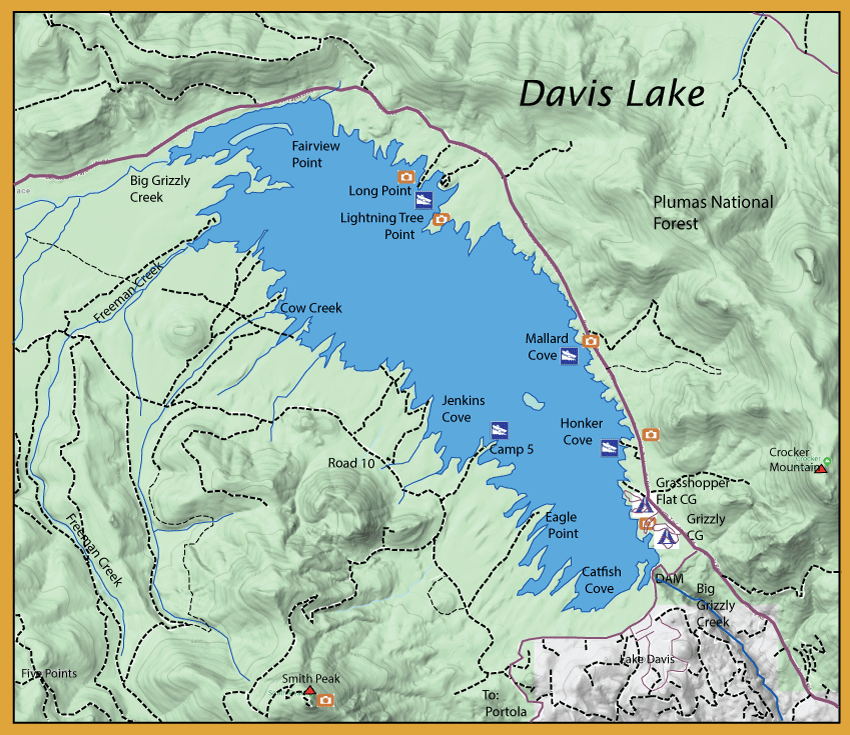
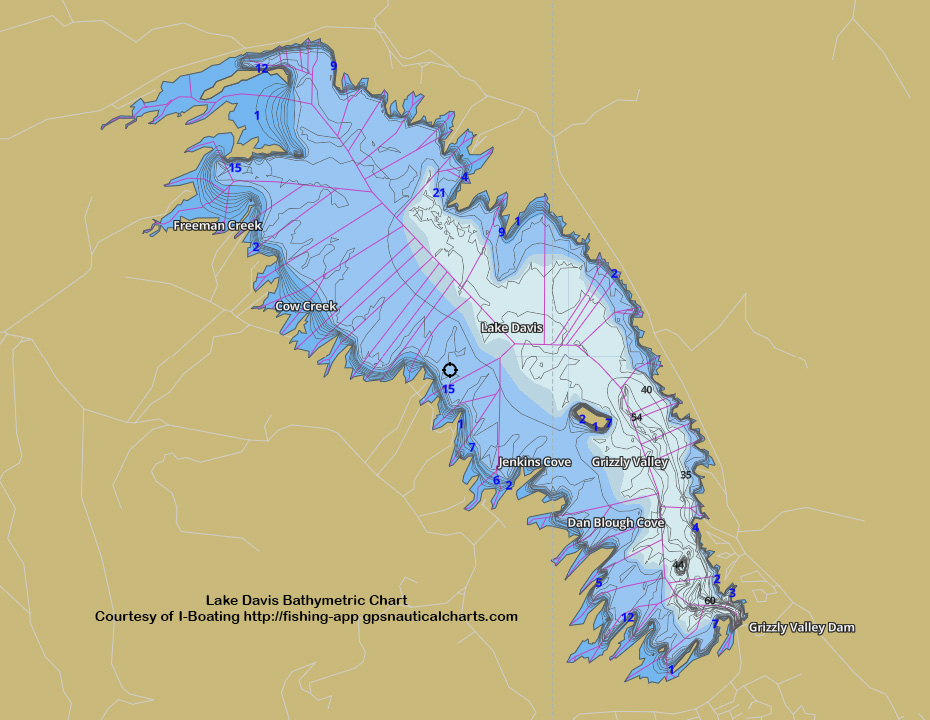
Lake Davis (ele: 5775 ft.) is open all year, providing ice fishing through the winter. The lake covers 4,026 acres with boat ramps at Mallard Cove, Lightning Tree, Honker Cove and Jenkins Cove. It has numerous coves that can be accessed by float tube or boat and the shoreline provides many wading opportunities. The lake was developed by damming Big Grizzly Creek in 1967. Water Skiing and Jet Skis are not allowed on Lake Davis, providing a much better fishing experience. The old creek channel runs along the eastern shoreline and is an excellent area to fish during the late summer months. Ice-out usually occurs in April and is followed by blood midge hatches which can be fished with Brassies or Blood Midge Pupa patterns using an indicator or a slow retrieve. The callibaetis also start to hatch and a callibaetis nymph pattern can work very well with an indicator. Many fly fishermen fish the shallow coves located on the western side of the lake. This area holds most of the aquatic insects as well as weed beds. The area north of Camp 5 to Freeman Creek is good. Also try Jenkins Point and Cow Creek. Blood Midge hatches are particularly good around the south side of Eagle Point.
Starting in June and July, a good Damsel Hatch comes off in the morning at the north end of the lake. Use a thin bodied Damsel Nymph (brown or dark olive) pattern on an intermediate line. Later in the day, switch to a lighter color, such as tan since the damsel nymphs seem to lighten in color as the day progresses. A floating line is sufficient in the weedbed areas. Outside the weedbeds, use an indicator with a sinking line and adjust for depth. Many of the fish cruise so you also have to move around to find the fish. Local Guide, Don Rotsma, sight casts in front of the fish, straightens the line, and lets the damsel sit for a few seconds. Then, he retrieves slowly with pauses. Don gets the hits on the pause. Most of the naturals are over 1 inch in size with light golden to dark brown and olive colorations. Don likes to use 9 foot 3X Leaders with 3X or 4X Fluorocarbon tippet with a 4-6 wt rod. In the late afternoon and evening, a blood midge hatch generally develops. Blood Midges are usually size 12 to 14 but can get up to a size 10 . Chironomid’s can be active during the midday and are found in sizes 16 to 20 in black, tan, green, red, and brown colors. Try a callibaetis nymph with a blood midge pupa dropper under an indicator.
August and September, are good times to troll a streamer pattern working the deeper channels. The submerged channel at Big Grizzly Creek is a good choice. Try an Olive Woolly Bugger with a baetis dropper about 24″ apart. In September, Blood Midge and Caddis contine to hatch and many use an Olive Caddis with a blood midge pupa dropper, like a Red Brassie or a San Juan Worm. In late September and October, floating snails, leeches, and large cinnamon Woolly Buggers are popular when a larger trout come into the shallows to feed before ice sets in. This can actually be one of the best periods to fish Davis Lake.
Davis Lake is known for producing big trout due to the nutrient-rich waters. At one time, early in it’s existance, Lake Davis was estimated to produce over 40 lbs of fish for every pound of fish planted. Most of these fish were Kokanee and Eagle Lake strains of Rainbows along with some Browns. However, there were other introductions of largemouth bass, bullheads, shiners, and pikes that may diminished the fishery. The pike were found in 1994 and the lake was poisoned with Rotenone in late 1997 to rid the lake of pike. There was an overriding concern of the pike getting downstream and entering the Sacramento River System. However, after over one year of letting the poison dissipate to allowable levels for restocking trout, the pike were found to still reside in the lake. The lake levels were reduced in the 1990’s to restrict the pike from escaping the lake and the lake was treated again with Rotenone in 2007 finding success in elminating the pike. By 2017, the lake is now back up to maximum levels and the fishery has rebounded back to a healthy habitat.
|